
Document
Thumbnail
Share
CUID
MW-20872
SUBTITULO_SERIE
Cuatro siglos de música
SINOPSIS_SERIE
Después de un par de años turbulentos y azarosos (a causa del COVID), en 2022 el Festival Internacional de Piano En Blanco y Negro del Cenart cumplió su primer cuarto de siglo de vida, 25 años en los que se convirtió en el escaparate pianístico más importante del país, con resonancias internacionales.
Al abordar en 2023 la planeación y realización de la edición número 26, el Cenart continuó con las líneas de conducta que lo caracterizaron prácticamente desde su creación: variedad en la elección de los pianistas, tanto por su origen y proveniencia como por sus respectivos temperamentos artísticos; ofertas musicales amplias y variadas que incluían todo el vasto abanico del repertorio pianístico; programaciones generales e individuales armadas a partir de ciertos criterios específicos que permiten ese difícil equilibrio entre la unidad de propósito y la variedad de música; la inclusión cada vez más numerosa de mujeres pianistas en la programación; la vocación de abrazar la novedad y la experimentación cuando el caso lo requiriese.
En cuanto a su línea de conducta general, esta edición de En Blanco y Negro se realizó bajo el rubro de “Cuatro siglos de música”, idea que implicó la solicitud a los pianistas invitados de incluir en sus programas, en el marco de una total libertad artística, obras de los siglos XVIII, XIX, XX y XXI. Además de la amplitud de estilos, lenguajes y técnicas que esto representó, el concepto programático general tuvo como virtud añadida el hecho de que algunas de las obras tempranas propuestas se concibieron originalmente para el clavecín, algunas otras para el fortepiano y la mayoría para el pianoforte moderno; una variedad organológica que sin duda enriqueció la percepción del público.
Así, la programación de este 26 Festival Internacional de Piano En Blanco y Negro del Cenart incluyó en un extremo obras de Johann Sebastian Bach y, en el otro, piezas de muy reciente factura que ahí se estrenaron. Al interior de una lista de compositores que incluyó a algunos de los grandes tecladistas de la historia (Mozart, Chopin, Beethoven, Liszt, Brahms, Prokofiev, Debussy, Ravel y Schumann), destacó la presencia de músicos menos conocidos, como parte de la apuesta del Festival para poner al público en contacto con música de todo tipo, de todas las latitudes. Ahí estuvieron, entonces, los nombres de Muzio Clementi, Hermes Luaces, Manuel Comesaña, Arvo Pärt, Cécile Chaminade, Andreas Neubauer y Dora Pejačević. Paralelamente, junto con el programa concertístico, se llevaron a cabo actividades como clases magistrales, conversatorios y un ciclo de películas con el tema concierniente: los pianistas.
En el rubro de la música mexicana, la programación de ese año incluyó a Mario Lavista, Federico Ibarra y Arturo Márquez, con la bienvenida novedad de que dos de nuestros pianistas, Alejandro Corona y Mauricio Náder, tocaron composiciones suyas, y Leticia Gómez-Tagle interpretó un arreglo de su puño y letra. Otras presencias interesantes en la lista del repertorio fueron la de Mario Ruiz Armengol, espléndido músico mexicano cuya obra está por difundirse como merece, y las de dos grandes compositores que (además de la croata Dora Pejačević) cumplieron efemérides importantes en 2023: Sergei Rachmaninoff y György Ligeti.
Para los recitales de la edición 2023 de En Blanco y Negro, se convocó a cuatro mujeres y cinco hombres, con la presencia de cinco intérpretes mexicanos y pianistas provenientes de Argentina, Croacia, el Reino Unido y España.
Texto de Juan Arturo Brennan, con modificaciones mínimas
EXTRACTO_SERIE
El Festival Internacional de Piano En Blanco y Negro, en su edición 26 (2023), celebró “Cuatro siglos de música” con obras de autores clásicos y compositores contemporáneos. Incluyó a pianistas de México, Argentina, Croacia, Reino Unido y España
TITULO_PROGRAMA
SINOPSIS_PROGRAMA
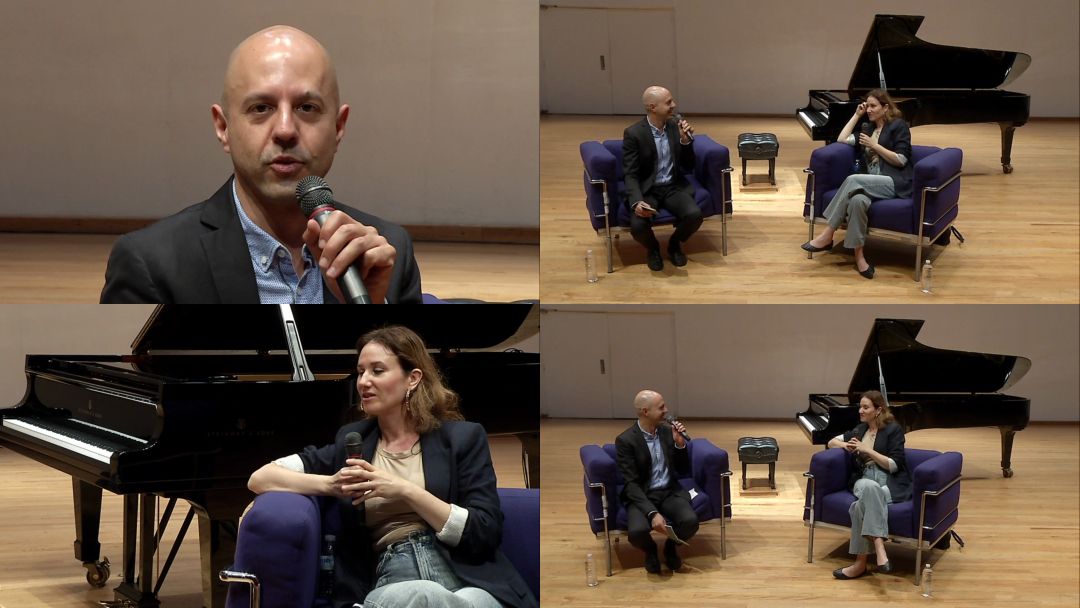
El músico Aquiles Morales entrevista a la pianista croata Martina Filjak, quien comparte su historia musical: desde sus inicios como hija de padres pianistas, la influencia de sus mentores en su trayectoria y las adversidades que enfrentó en la búsqueda de su propio sonido, hasta su intensa rutina musical actual
EXTRACTO_PROGRAMA
El músico Aquiles Morales entrevista a la pianista croata Martina Filjak, quien comparte su historia musical: desde sus inicios como hija de padres pianistas, la influencia de sus mentores en su trayectoria y las adversidades que enfrentó en la búsqueda d
N_PROGRAMA
12
N_TOTAL_PROGRAMAS
15
DURACION_TOTAL
01:14:45:07
PARTICIPANTES
Martina Filjak, pianista croata:
Aquiles Morales, conductor de orquesta y moderador
SEMBLANZA_PARTICIPANTE
Martina Filjak es una pianista croata que obtuvo reconocimiento internacional tras ganar el Concurso Internacional de Cleveland. Ha tocado en escenarios como Carnegie Hall, el Musikverein y el Teatro Colón, y colaborado con orquestas y directores de diversos países. Su discografía incluye obras de Soler, Schumann, Bach/Liszt y Scriabin. Ha recibido premios en su país y participa en festivales y proyectos de música de cámara. Su repertorio abarca desde Bach hasta Berio
TIPO_ACTIVIDAD
DISCIPLINA
Música | Música > Música clásica | Música > Música contemporánea
INSTITUCION_PRODUCTORA
PALABRAS_CLAVE
Clase magistral | Conferencia | Croacia | Festival | México | Música | Música clásica | Música contemporánea
TRANSCRIPCION
Muy buenos días a todas, a todos. Soy Aquiles Morales y estoy muy contento de estar en esas charlas en blanco y negro con grandes pianistas de todo el mundo y de México que están haciendo de este festival algo realmente excepcional. El día de hoy la maestra croata Martina Filiac, quien ha tocado con las mejores orquestas del mundo en las mejores salas y con quien tendremos el gusto de conversar. Bienvenidas y bienvenidos. So, Martina, bienvenida. Muchas gracias por estar aquí y tomar tu tiempo para hablar sobre tu vida y tu música. Bueno, gracias por ser tan fuerte y me gustaría que diera la oportunidad en caso de alguien que está viendo el concierto de la noche. El público estaba tan caliente y estaba tan bien recibida y tanta enfermedad. Muchas gracias por eso. Bueno, la maestra quiere agradecer que el día de ayer el público fue tan cálido y que la recibieron de una manera muy, muy emotiva, que estuvo muy, muy contenta, quiere agradecer eso. Ok, so I want to start by saying, doberdan. Doberdan, Aquiles. ¿Qué gusta? So, ¿qué gusta? ¿Qué gusta? means, how are you? Oh, doberdan is, buen día. I'm good, thank you. Excellent. Now you're learning. I want to talk about your country I have a very good friend a conductor and we were singing Jurica Petrac Oh my god, fantastic You know him? Not personally, but I know the family Okay, so we were singing some clapa Need you say more? You know clapa? I know clapa So I was wondering, it's so intense. It's the sea, it's the wine, it's everything in there. Tell me about that strong influence in your musical, I guess, life. How does it go to the piano? What an interesting question. And I really did not expect this to be opening. So this is great. Thank you. Yes, Croatia is definitely a very unique combination of very, what you mentioned, you know, sea and song and wine. So very Mediterranean temperament. But still we have this Slavic depression in the same time. So we have just like very deep feelings also. y nos sentimos también muy cerca a esta cultura slavica y a la cultura de Norte y Único de Europa, pero todavía en una manera muy temperamental, muy mediterráneo. Creo que eso es lo que hace el país unico, y creo que muchos músicos como yo, tenemos ambos en este mundo. Eso es muy interesante, voy a traducir. Entonces le pregunté a la maestra sobre sus orígenes, ella viene de Croacia, Y hablar un poco sobre la tradición que existe allá. Hay una tradición coral que se llama clapa, que se considera parte de los bienes inmateriales de la UNESCO. Y es un tipo de canto que se hace donde se habla de la patria, del vino, del mar. Y le preguntaba cómo es la influencia que ella recibe de su propio país, de estas tradiciones croatas. cómo la expresa en el piano. Entonces, bueno, lo primero que contesta se impresiona un poco del hecho de que le esté preguntando algo así, que no lo esperaba. Y dice que, bueno, hay dos lados en su país. Este lado muy mediterráneo, el mar, el vino, toda esta parte del gozo propio del mediterráneo, pero también esta parte más depresiva de los países eslavos. Y que, entonces, cómo esas dos diferentes personalidades, podríamos decir, se juntan y se pueden expresar en los músicos croatas. So, yeah, I don't know if you want to say something more. No, you said it perfectly. But have you been to Croatia? I have. Well, I feel I have because there are so many stories. Yeah, yeah, yeah. The beaches are so beautiful. You were naturalized. Yeah, but I have not. So you have to come. I have to. la clapa. I know. La clapa y la clapa y la cita con el wine. That would be so awesome. So what I was wondering of all of that once you like I really feel that Croatians have this special depth but at the same time as you say it's very warm. So let's talk about the choices of the musicians. Like Liszt is something like that, right? He has so many countries within and so many personalities. Yes. So before, when I was younger, I was not a fan of Liszt because I always just saw him in a very one-dimensional, oh, there's this macho pianist culture. Yeah, a lot of them. But actually he is a really multi-dimensional creature. I know, spiritual. Y si lo que ha hecho, él hizo eso cleveramente. Él era un hombre y él era un hombre y él era un fantástico pianista y él era un gran compositor y cuando él viajó el mundo y hizo todo esto, y hay cosas increíbles, hay cosas increíbles sobre su vida, entonces él fue todo espiritual y él fue a ser un hombre. Y él fue un hombre. Y él fue un hombre. Y él fue un hombre. Así que se ha parecido y casi casi extraño que una persona le hiciera mucho en su vida. One Only Life. One Only Life. Pero nos dice cuánto era su apetite para el mundo. ¿Tienes ese apetite? No quiero ser un prieta. Bueno, le preguntaba sobre... Pero todo el resto. Le preguntaba sobre este compositor, Franz Liszt, que interpretó ayer una de sus obras, en el sentido de que es alguien que también tiene estos facetas diferentes. Él fue un gran, gran, gran pianista, un compositor que también estaba caracterizado por desmayar a las chicas en los conciertos, etc. Pero también tuvo un lado muy espiritual y entonces le preguntaba cómo se relacionaba con ese compositor y decía que de joven no le gustaba mucho, le parecía un macho del piano, Muchas notas, muy rápido, virtuosismo. Pero después ya conociéndolo, vio todas estas facetas, ¿no? Y las cosas que hizo en el lado espiritual, en el lado también de historias de vida muy variadas. Y pues pudo ver este apetito por el mundo, ese apetito por la vida. Y le pregunté entonces si ella tiene este mismo apetito. Dice que sí, excepto que no le interesa ser una sacerdotisa. Bueno. Great. So I would like to know a little bit about your beginnings. Like, you started playing the piano. Why? How was your first piano lessons? When did it change to be a real professional thing? A little bit about your executive. Well, it's almost boring because I'm from a musician family. Even more boring, my parents were pianists. So in that sense, there was not really a beginning. There was just transitions and kind of cruising in between different levels of imitating what my parents were doing. And then in one moment, this imitation of what I was singing in my family had to become more structured education. y mi madre found a piano teacher porque ella tenía no autoridad sobre mí y es imposible y ella found a piano teacher y dijo que era para ella ¿Y tú eres un rebelde? ¡Absolutamente! ¡Virtualmente! ¡Unteachable! Y con tu teacher y la cual ella found ¿Tenía que fue calma por un tiempo pero luego Y, sí, yo tengo que decir que me han cambiado muchos profesores. Y no me creen en la escuela, como en la escuela. O sea, ¿qué crees en la escuela? O sea, ¿qué crees en la escuela? O sea, ¿qué crees en la escuela? No me crees Ahora estamos hablando de la física, es diferente. Así que es útil para tener diferentes teachers y aprender diferentes técnicas. Pero a un cierto punto, la gente tiene que aprender a aprender a usar su propio cuerpo y ser uno con el instrumento y no solo con un niño o un niño o un niño. Porque un niño que es un metro 60 alto no va a sitar en el piano en la misma manera como un hombre de un metro 85. Y también también todo el mundo tiene un corazón. Y todo el mundo está buscando un diferente. Y eso necesita ser convincente y necesita ser dentro de la persona. Es una persona física y una persona emocional. Si alguien tiene una persona muy intuitiva o una persona intuida. Es completamente malo para el que le hace a la persona muy alta. es solo que lo llevara completamente fuera de su personalidad y tratara de categorizarlo así que eso es lo que estoy muy contra tratando de decir oh, esto es el único modo de jugar y no hay otro, creo que esto es muy peligroso lindo le preguntaba entonces sobre sus inicios y contesta que casi fue aburrido porque sus padres, los dos pianistas entonces que más que un inicio pues fue una especie de transición y que como su madre no le podía enseñar nada porque ella se considera alguien un chavo, alguien que no le puede enseñar entonces le consiguió una primera maestra y entonces le preguntaba si con ella sí se dejó también le pregunté si fue una rebelde natural me decía que sí y con esta primera maestra entonces dice que sí, un poco, un poco de tiempo mantuvo la calma pero después ya no Y entonces habló de algo muy interesante, el principio de la individualidad y cómo en realidad no se puede como tal enseñar a hacer algo de una forma, vamos a decir, de la escuela rusa, de la escuela francesa, puesto que cada quien tiene un cuerpo diferente, unas manos diferentes y también una emoción diferente y que entonces no se puede decirle a alguien, haz esto así. cada quien tiene que descubrir su propio sonido y su propia forma de tocar. Good. So, a little bit against that idea. Do you have one or some teachers that have really changed you or somebody that really taught you something transcendent or do you feel you have always been an independent thinker or is there someone that gave you something special? Well, of course, there were many people that marked me in different ways. I always started to rebel when I started to feel like I had to be categorized. So this was always a big problem for me. But I remember that I studied in Hannover with Karl-Heinz Kemmerling. So for a certain time he was a fantastic teacher and he really taught me some very solid German basic things that with my Croatian temperament were probably very good for me at the time. ¿Qué kind of things? Very, you know, how to just be very basic and sustainable in your practice. Like really German, thorough, basic, you know, work, the coal mines work. Because I was always talented and things were going easy for me so I was like just cruising through them and he kind of really grounded me. So that was very valuable. And then when I was in Como Piano Academy, I remember having some amazing moments with Dmitry Bashkirov, who just never let me be in my comfort zone. So he always overwhelmed you with requests and with details and with things to do. And if you didn't do them in those 30 seconds, then he would say you're stupid. And that was fantastic. siempre te puso de tu zona y siempre estabas como, oh my God, ¿me estoy bien suficiente? Pero eso fue fantástico en ese momento. Y otro profesor que tenía... Así que puedo traducir. Le preguntaba que si dentro de esta rebeldía, esta falta de sensación que alguien puede hacerte ser de una forma o de otra, sino que es una búsqueda personal, si hubo algunos maestros, maestras que lo hubieran marcado en forma especial. Entonces habló de dos. Uno en Hannover, su nombre, Kemerling, quien le enseñó este rigor de la disciplina con su personalidad croata, necesitaba esa parte de sentirse más en la tierra y esa disciplina alemana que le ayudó mucho. Y después habló en la Academia de Köln, el maestro Bashkirov quien le hacía siempre ir más allá en los detalles le pedía muchas cosas y si en 30 segundos no lo había resuelto ya le decía que eran unos estúpidos y entonces decía que eso le parecía muy bien porque le obligó a ir más lejos y a avanzar en su técnica y luego había una tercera persona que realmente no debería olvidar right now because it was the biggest thing that anybody ever did for me was my Korean teacher who is now back in Seoul in South Korea, her name is Mi Kyung Kim and she made me watch my video recordings that was the lesson because she really developed my awareness so I would come to the studio she would record with professional equipment and the camera then I played 20 minutes half an hour the piece o whatever, y entonces me hizo y luego ella would stop the recording y decir, aquí, ¿sí? You're so boring y luego ella would say ¿sí? 2 minutos 45 es como nada so it was incredible criticism and really watching every single second of my playing but that made me so hyper aware of what I was doing y todavía lo hago a veces si tengo la fuerza mental no, es un mirador es la cosa peor es difícil habló de una tercera persona a quien no debía de olvidar que es su maestra coreana que actualmente ya regresó a Seúl y que le su nombre Mi Kyung Kim quien le enseña a verse en video 20 minutos Y después observarse en detalle. Yeah. And well, so real life, the competitions, that's very hard, I think. I don't know. How did you live that being with others and trying to be the best and all of the energy of competitions? Some people like it. It was so awful. It's terrible. It was so awful. But there was, I mean, En otro momento, I realized there is no other way. Either you do this, or you do not. And then you take away a lot of chances from yourself. I think in those competitions, when I was doing well, I survived mentally by... I was doing a lot of meditating daily. And I had almost no... And it was difficult porque ya es el tiempo de la social networks y phones que estaba isolando completamente de la vida de la vida. No estaba hablando con otros. No estaba viendo las plataformas. No estaba viendo lo que los Facebookos estaban diciendo. Nada. Yo estaba grabando y practicando y concentrando en cada performance en la concerto. Y así fue un poco extraño to, you know, be maybe sometimes in the same house with 40 other pianists and not talk to anybody for three weeks. And probably I looked crazy, but it was a way to focus and survive. Le preguntaba sobre, bueno, pasando de los estudios ya a la profesionalización, la manera muchas veces son los concursos, ella hizo varios, ganó varios, y le preguntaba cómo lo vivió. Hay gente que le puede llegar a gustar, pero es difícil. Me dice que era que no es algo que le gustara, pero que pues es la manera de poder acceder a algo más después. Entonces que pues si los haces o si no, pues simplemente no puedes llegar a más. Entonces me decía que la forma en que lo hizo fue encerrarse en ella misma, en meditación, en una concentración sobre su propia persona y que incluso de pronto estaba, Pues ya era el tiempo de las redes sociales, no veía Facebook, no veía nada, solo se concentraba en lo que estaba haciendo. Y también de pronto estaban en un mismo hospedaje todos los pianistas que iban a concursar, 30, 40 pianistas, y que no hablaba con nadie, se la pasaba completamente en su tema, y que fue la manera de sobrevivir y fue la manera de poderlo hacer bien. Yeah, because, you know, I remember, now you made me remember. This atmosphere, when you're around with 40 pianists, people start talking. And then one says, oh, did you see that Jew remember? He has a student at the competition and for sure he's going to win. And then the other says, oh, that other Jew remember is so awful. He always pushes another people. And then the third one says, oh, but the piano is awful. I don't feel good on that piano. So, you know, you talk to people and you get all this negative feedback which makes you paranoid and you haven't even played a note. So, of course, there was competitions where I listened to this and then I didn't win because I was, it's really just, maybe I was too sensitive but it really disturbed me mentally to listen to these stories. So then I chose not to listen to them. Ya, nos cuenta que una de las cosas que pasa cuando sí hablas con la gente, empiezan los otros pianistas a decir, ah, es que sabes, este miembro del jurado tiene a su alumno concursando y pues obviamente lo va a preferir, o este miembro del jurado es horrible, o el piano está muy mal y yo no puedo tocar ahí. Entonces dice que en los concursos donde sí escuchó a sus colegas, no ganó porque esas energías malas la distraen, ¿no? Entonces que era mejor. no hablar con ellos pues sí y cuéntame a little bit about I read that it was very important the Cleveland competition Cleveland was the one where we all lived in the same house and I talked to nobody for three weeks but it was a good competition for me interestingly enough the first time I applied for Cleveland in 2007. I'm telling this because of students who are maybe listening who maybe want to give up on something. The first time I applied for Cleveland was 2007. It's a big competition and they do international auditions where you go and you have to take a video and then from the video recording they choose 35 people who go to Cleveland and initially maybe 200 or 250 apply. In 2007 I applied. No fue ni invitado a la audición. Estaba tan upset. Y en 2009, la aplicación, cuando me sentí con el post, me dijeron que me iba a ganar. Estaba muy seguro de la primera. Y me dijeron que me iba a ir a la audición. Y me dijeron que iba a ir. Mi whole mentality era que era así. Así que la parte de la historia es que no me dieron. It is a difficult competition. I managed from the second time. The most difficult thing about it is I think it's three weeks and there was three long solo rounds, like really big. And then at the end when you're completely tired, you have to play our concerto with the Cleveland Orchestra, which is an amazing orchestra, but you get one rehearsal. You get one rehearsal after the three weeks of being completely old. Even if you were not crazy, it's three weeks of being very tiring, three weeks. You get one rehearsal the day of the finals and then in the evening you play. So I was very, I want to even say lucky, I chose my concerto well because that spring before the competition. Which one was it? Rachmaninoff too. pero en el año de la competición yo played it maybe 5 o 6 veces con el orchestra entonces yo was ya estaba muy into it y yo estaba muy seguro que incluso después de no practicar para 3 semanas yo podía practicarlo por 1 día y yo iba a estar listo y creo que esto es lo que pasa a muchos de las personas no expectan a ir a la final o no no para la final o no para la final pero no para la experiencia con el concerto y luego no les entrega y podrían haber llegado entonces creo que si hablamos de ir a competencias tienes que estar listo para ir hasta el final, mentalmente y realmente preparado entonces le pregunté sobre una competencia que de acuerdo a su biografía fue muy importante que es la competencia en Cleveland, dice que ahí fue donde no habló con nadie y una de las cosas que quiso compartir para los estudiantes en particular es el hecho de que al principio en los 2007 aplicó, es una competencia en la que tienes que mandar un video y ni siquiera la llamaron para la audición, entonces que pues el mensaje sería no rendirse puesto que después de esto en 2009 dijo voy a ganar esta cosa y entonces volvió a mandar la aplicación y estaba lista para ir hasta la final y ganarla y comenta que es una competencia realmente difícil con tres rondas de solos muy pesadas y que una vez que pasas esas tres rondas, la final con la orquesta de Cleveland, que es una de las orquestas más importantes de Estados Unidos del mundo, en ese momento tienes un ensayo para estar listo para el concierto y cree que en ese aspecto tuvo muchísima preparación porque había escogido bien su concierto, el 2 de Rachmaninoff y lo había ensayado por lo menos 5 veces antes con orquesta lo cual le permitía que en un solo día, después de 3 semanas de no tocarlo pudiera estar lista y con un solo ensayo sentirse bien, dice que algunos competidores hacían el error de tal vez no pensar que realmente llegarían a la final o estar un poco inseguros porque no habían hecho el concierto con la orquesta previamente y que eso les a pesar de que hubieran podido ganar, pues las hacía que al final no ganaran. Entonces, bueno. Wonderful. Yeah, it's amazing. So, real life, after that. I was reading, it's so incredible, you are doing concerts everywhere, like Colombia one day, Mexico City, Europe, Japan and everything. How is it your everyday life nowadays? Yeah, it's not all the time like that. So this is a kind of South American tour and I have to say the schedule is quite dense. I definitely feel the way I'm getting tired now is different than the way I'm getting tired 15 years ago. Even though I feel like I'm very fit and I'm working on my fitness all the time and I do a lot of hiking and I do a lot of yoga and not only practicing piano. But yeah, I do feel just like differently and all this kind of moment. Well, it was crazy, right? When did you arrive? I played Rahmaninov 2 in Colombia on Friday evening and then Saturday I had the flight and Saturday night I arrived to Mexico City and then Sunday I was playing the recital. Yeah, that's crazy. Maybe one extra day would have been so nice. But it was either take it or leave it so we decided to do it. Everyday life, it really depends. Sometimes I'm playing a lot of different repertoire, one after the other so right now I have a kind of crazy month and a half with a recital program, Rachmaninov 2 and then in two weeks I'm doing two concerts with an orchestra in Croatia, which is Rachmaninov 2 and another modern piece for the orchestra, and then in three weeks I'm back to the United States with list one and then in four weeks I'm doing a program with Bram's piano quintet and then till the end Por lo que es lo que es lo que es Gershwin, Rhapsody, y Blue y otra otra. Y un poco de Rakdos. Así que requieren un nuevo tipo de organización si quieres mantener todo el reparto. Pero, yo todavía tengo tiempo para mí porque si no estoy en el tour, sometimes tengo dos o tres free weeks cuando puedo hacer muy poco práctica o practicando menos y tener mucho tiempo para mí. Desde un mes estoy ejecutando un festival. Solo me dijeron director de un festival. Así que es otro desafío y es tan interesante. Bueno, tenemos que traducirlo. Le preguntaba sobre su vida actualmente, donde tiene un concierto en Colombia, un concierto en Japón, un concierto en Ciudad de México. Y me dice que, bueno, no todo el tiempo así, pero que, por ejemplo, en estas semanas, tuvo un concierto el viernes, el viernes hace cuatro días, en Colombia, el Rachmaninoff 2. El sábado viajó a México y el domingo tuvo el recital de Blanco y Negro con un programa completamente diferente. En una semana creo que vuelve a tocar el Rachmaninoff 2, después viaja a Estados Unidos para hacer el List 1 y después va a tocar el quinteto de Brahms, que es muy difícil también. El cuarteto y el cuarteto. Y el cuarteto también. Son obras muy pesadas. Y después va a ser Rhapsody in Blue, ¿Eso dónde es? ¿Dónde está? En Croacia Pero dice que sí tiene tiempo de descansar De todas formas Y que después, bueno, sí pasan unas semanas Donde no tiene ninguna actividad ¿Cómo se maneja De realmente relax Si tienes ese escenario? ¿Tienes alguna Solution mágica? ¿Tienes cuando estoy viajando? Cuando estás viajando I try to sleep I go to the gym I like to spend Fortunately I like to spend a lot of time By myself So I'm really If you leave me by myself for five days I'll be very happy I'm fine Already when you were in the competitions So I'll be very happy Going to a restaurant by myself And finding a restaurant I try to keep Some kind of discipline Si yo estoy solo en diferentes hoteles por días, yo voy a la gym cada día por el resto de una hora y a half y hago some meditación y yo estoy muy caliente y entonces el fitness me hace me cansado y el meditación me hace me cansado es la combinación Y comida porque cuando te viajes hay muchas cosas de las cosas pero tienes Google Maps No, pero no, pero no, pero no, pero no. You do eat everything. No, I don't really. I try to eat as healthy as possible. Even if you're traveling. Yeah, especially when I'm traveling at home even more. But especially when I'm traveling, I don't do really a lot of meat or I don't do meat at all. And there's hardly any alcohol and no pasta, no bread. Pero me mantiene muy vivo y muy fresco. entonces es equilibrio y tiene la ventaja de que le gusta mucho estar sola entonces no le molesta de pronto estar tres o cuatro días pues eso, con ella misma que es muy feliz si tiene la oportunidad de hacer eso, lo cual también le ayuda y le pregunté sobre la alimentación cuando uno está de viaje hay tantas delicias que probar pero dice que en realidad le gusta siempre comer saludable, casi no carne o nada de carne en realidad un poco bueno, no, nada de alcohol y no pasta no pan entonces que eso la mantiene con energía y fresca ya, ya, de unidad bueno, hoy sí se comió un panqué pero bueno el premio se comió un panqué ok ok let's talk about recording recording CDs, that's another another experience that's very hard, it depends on your personality but it's the mirror, right, you listen and it's the same as the videos, you're like oh my god, that can be better but you started very young doing, well there's one CD that's a little bit lost and then there's the Padre Soler Sonatas, tell me a little bit about your recording experiences. That's another, it can be so traumatic to record. So I don't do much recordings, which is something my agents are so disappointed about because they're telling me, oh, you have to push out the recording and we need a new recording and you need to record. And I kind of don't agree with that because I feel that I'm ready to record only after I played a piece a lot of times in concerts. So once you really start a piece in different halls and different pianos and different audiences and you really felt it from... Because, you know, sometimes there are people who make recordings. It's like, oh, nobody recorded that. Let me learn it and record it in two months. And I'm not sure if... I appreciate it, I respect it, but I'm not sure this is what I need. I need to feel like I looked at every aspect of the piece and then I go to the studio and then I actually play it like I would do in a concert and I tried to do very big lines and not record two bars and then two bars because that breaks the continuity. So I tried to, really after having played it 40-50 en concert, then I tried to play like that on the CD. So, of course, if you have this kind of philosophy, you can't make a new CD every year. And I'm perfectly okay with that. It sounds amazing, because usually it's the other way around, because you're going to tour, so you need to have the CD ready to sell or whatever. Yeah, I don't care. Yeah, good. No, it's wonderful. Le preguntaba sobre la experiencia de grabar. Grabar es muy difícil porque uno se escucha y queda para la posteridad cualquier detalle y me contesta que ella es un poco diferente, sus agentes quieren que esté grabando y ella no está tan de acuerdo de estar grabando todo el tiempo, porque para ella grabar algo le gusta haberlo tocado muchas veces en concierto, en diferentes salas, haber sentido las diferentes acústicas y poder grabar de la manera que es la mejor, que es de tomas largas en la que se escuche realmente la idea completa y no que uno va grabando casi compás por compás y pegando porque eso le quita la continuidad a las frases. Entonces que para poder hacer eso, pues no puedes aprenderte una pieza un mes antes y después tocarla, sino que tiene que haber una madurez y un trabajo ya de haberla interpretado muchas veces. Entonces que a ella no le importa no estar grabando todo el tiempo un disco cada año porque siente que la manera que ella lo hace bien es después de haberlo grabado muchas, muchas veces. Yeah, there are some examples. I'm thinking about Brendel. He recorded Beethoven's concertos, like, I don't know, four times, many times. The last one, it's magical, because he already played that. You know, he played this his entire life, and it changes through the decades how he sees it and everything. Now you were mentioning Brendel, and I was also going to mention Brendel, and Polini, and Richter, and Pogorelic, y, you know, they made these amazing recordings. Do we really need the 75th recording of Beethoven, Sumatra, Chopin? I mean, we really, if we do recordings, they have to be so personal and so special that there is a reason to record it. Otherwise, we have the best recordings already. Yeah. More or less. Yeah, yeah, you're right. Bueno, yo le preguntaba, por ejemplo, de Alfred Brendel, que grabó los conciertos de Beethoven muchas veces, y ya la última vez que los grabas es una cosa impresionante porque justamente los ha tocado toda su vida, es parte de su repertorio de vida, entonces me dice que sí, justamente hay pianistas como Polini, como Brendel Richter, que han tocado toda su vida y han hecho las mejores grabaciones que si realmente se necesita que haya una grabación 200 de los conciertos de Beethoven cuando ya están las mejores versiones but... Por ejemplo, Dora Pejacevic It's not so much recorded Maybe things like that Yes, so we are planning a recording of that We just recorded the Fantasia Concertante And we are planning a recording of the concerto So, and I wanted to add some solo pieces For sure I'm going to play For sure I'm going to record the two solo pieces que yo played en la concerto y así que esto es mi forma de preparar la CD, también también también de experimentar en las muchas concerts como posible, así que es algo worth recording, y yo like her música mucho, es una interesante persona y ahora she's having many artistas con una revista después de 100 años de su muerte y made a movie y made a movie, they're making a lot of things now which doesn't mean we shouldn't make an extra thing we did a big concert in Croatia that also had a lot of her works on it some of the voice and piano works are so good I mean they're on level of Hugo Wolf they're really such high level writing and when it comes to miniatures she's so special I think we should tell the audience a little bit about her because No estoy seguro, ellos saben. Entonces, bueno, me empezó a hablar sobre que justamente sí, hay un proyecto de grabar, su concierto para piano y las dos piezas que interpretó ayer. Y que de esa forma sí, sí vale la pena hacer una grabación de esto. Entonces yo le pregunté si nos puede hablar un poco de la compositora croata Dora, porque no la conocemos. We don't know her so much in Mexico. So maybe you can tell us a little bit about her. Bueno, este año, en 2023, se marcó la 100th anniversary de su muerte. Ella fue una muy interesante persona. En ese momento, todavía, de hecho, de hecho, las mujeres composers hoy no son más a topic. Es completamente normal. Pero en ese momento, en este año, con Clara Schumann y Fanny Mendelssohn, en Polo, con Grazina Baciewicz, etc. Pero no eran tantos mujeres que eran tan activas. She was extremely talented. She was of a noble origin, aristocratic. I think her father was a count. So she did get good education. She played violin and piano. And she got educated in Budapest and in Dresden. She died after childbirth, or shortly after childbirth, age 37 or 38. So she died very young. But she left one big symphony, one big piano concerto, Big Fantasy for piano and orchestra. A lot of small miniatures for piano, which we heard some yesterday. An overture for orchestra, some leader for voice and piano, some wonderful chamber music works. It's a very late romantic... A bit contemporary already. Yeah, going towards expressionist modernism, but not quite yet. un estilo romántico de expresión muy exuberante, muy opulente muy rico en harmonias y orquestación definitivamente un compóscito interesante Bueno, pregunté sobre Dora Pejacevic quien fue una quien fue una compositora pues hace 100 años, se cumplen 100 años de su muerte y que lo que ahora pues es más común, aunque siento que todavía no al 100%, pero en ese tiempo todavía menos, exceptuando Clara Schumann o Fanny Mendelssohn o una compositora polaca que no podría pronunciar pero que pues ella así fue una innovadora en su tiempo que estudió en Alemania y también en Hungría y que dejó un legado impresionante de obras, de canciones, de líder dejó también miniaturas para piano como las dos que interpretó ayer el concierto para piano y obras que están al nivel de Hugo Wolf entonces bueno que sí vale muchísimo la pena recuperar su obra yeah, that's a great Es news that you're doing that CD. Yeah, I'm really happy about that too. That's wonderful. Yeah, so you just told us about the festival Dubrovnik. Yeah. So now, because she's not busy enough, now you're the director of the festival. So tell me about that festival and what your vision for it will be. Bueno, el Dubrovnik Festival es probablemente el mayor manifesto de esta especie en Croatia. Es un festival de la semana. Es un festival de música? Es un festival de música y un drama. Pero también estamos tratando de hacer exhibiciones along el drama. Hay un ballet y un folclore. Así que es un día seis meses largo. Así que necesita de encampar muchas cosas de diferentes cosas. I just took over the artistic leadership of the festival. pero generalmente es un muy bueno oiled machine porque next year we will be celebrating like the 75th edition of the festival and the future direction will be more thematic because I feel that the program is so diverse that it needs some kind of glue that is going to tie it together even if just loosely and even if just you know kind of in a very relaxed way so the next season is the Mediterranean which is such a beautiful topic for us and it's something that everybody who is from Croatia or coming to Croatia will be feeling connected with but it's still loose enough that you can connect many different things so for example we're going to have Shakespeare's Storm which still happens in an island in the Mediterranean in the drama department and we're going to have Jordi Saval and Hesperion 21 which are amazing uno de mis pianistas favoritos que va a performar que es Pierre Laurent M.R. Así que no puedo decir sobre el programa así que vamos en esa dirección y será espero y creo una edición muy interesante. Suena genial. Le pregunté sobre porque como no está suficientemente ocupada le acaban de nombrar la directora del festival de Dubrovnik y le pregunté sobre este nuevo encargo acaba de tomar el rol y están planeando la edición siguiente Dice una maquinaria que ya está bastante aceitada, lleva 75 años sucediendo, es un festival que dura 6 semanas y en esta edición que viene, bueno ella siente que lo que le hacía falta era a lo mejor una unidad, un tema que le diera unidad a todas las diferentes manifestaciones, puesto que es un festival de música, de teatro, pero también van a intentar que haya exposiciones y que haya por ejemplo ballet, que haya danza. entonces en la siguiente edición el tema que le va a dar unidad a todo va a ser el Mediterráneo que pues en Croacia es un tema fascinante están ahí las playas y las historias y que además es una manera bastante amplia de incorporar muchas de las temáticas por ejemplo habrá Shakespeare y la tempestad que sucede en una isla en el Mediterráneo por ejemplo o también bueno habrá un gran pianista que Pierre M. A. uno de los más grandes pianistas Jordi Zaval claro, el grandísimo Jordi Zaval beautiful, it sounds awesome yeah, it's so interesting for me I don't plan to perform at the festival because realistically I don't think that I will perform outside of it but I performed there many times as a guest artist so it's time for me to at least when it comes to that particular festival to give opportunity to other people because even if it's six weeks long it's still a limited opportunity however I believe that we can really take it in a new and in a fresh direction it's not going to fail without me but every person that comes as an artistic director always brings a little bit of new spice and I personally feel that it's healthy for this kind of organizations to change artistic leadership every now and then or to just get a little bit of fresh ideas and they always build up like that and after me there will be another artistic director who will bring other ideas and that's good Yeah, let us know if you need some Mexican spice Artistic Everybody needs Mexican spice Because we could do something there That would be so awesome nos cuenta un poco sobre la siguiente edición en la que ella no va a participar como intérprete ya lo ha hecho muchas veces y quiere darle el paso a otras personas, aunque su duración de seis semanas son ocasiones limitadas y habla de la importancia de que cada cierto tiempo cambien de dirección, puesto que cada nuevo director le da una diferencia le pone su toque, algo va a aportar que cambie el festival, entonces Bueno, yo ya les decía que si necesitan algo mexicano, pues que si nos inviten, sería muy bello. Bueno, vamos a hablar de tu concerto. Qué maravilloso concerto. Y me encanta la energía que te pusiste en todos los diferentes estilos. Como, había mucha pasión en Handel, en Ligeti, y también en Schumann, por supuesto, en todo. y yo era como, oh, todo es lleno de pasión y hermosa. Bueno, tú necesitabas tocar por centurias. ¿Te dices que tenía que tener que café antes de la concerto? Y tal vez que no tenía. Yo pensaba que tenía que tener. Oh my God, so much energy. And some parts of the Handel, I was like, oh, I love it. It's so, yeah. Well, you know, about Handel we can discuss, but the moment you take it on a modern piano, I'm not a fan of trying to play like a tarpsichord if we're playing it on the piano. I know, it was powerful. It sounds like orchestra, more like an orchestral approach. Yeah, it was a very orchestral approach because it also felt like that overture, it has so much to do with whatever Jean-Baptiste Loulou was writing it's so Loulou or it's so Rameau in that sense when I'm playing that I'm always imagining actually a big orchestra it sounded like that rather than a small and I'm imagining that conductor not the conductor stick but with the cane that's what I'm imagining kill their foots yeah yeah yeah that was Loulou what a way to die for the music but yeah that's what I'm imagining when I'm playing that I'm imagining a big sound and I had a discussion about that with a friend who is a harpsichord player and he was like you know I love you but I was like well go play it on a harpsichord boring ya el repertorio de ayer del concierto en blanco y negro y como pues su interpretación llena de pasión en todas las piezas desde la primera parte Ligeti después Händel impresionante Schumann obviamente y bueno también Dora Pejacevic y el final de list con Luce de la Mermur entonces me pareció impresionante la manera de pues sí de poner tanta energía entonces bueno me dice que tiene que ver a lo mejor con los diez cafés que se tomó antes del concierto que sí definitivamente se notó mucha mucha energía y le decía que a mí en particular me gustó bueno el Händel con una pasión y etcétera y entonces me comentó que hace pocos días estaba hablando con un colega porque hay muchas maneras de abordarlo puesto que originalmente estaba escrito para el clavecín, el clavecín es un instrumento bellísimo que tiene una sonoridad única y que además permite la ornamentación, cosas espectaculares pero que nunca va a tener el volumen y las posibilidades de matices que tiene un piano. Entonces dice la maestra que a ella le gusta tocarlo, pues aprovechando todo lo que te da el piano en esta paleta sonora y que en ese sentido es una visión más orquestal que clavecinística y cómo entonces su versión nos hace pensar en las oberturas de Luli, por ejemplo, que es orquestal. Hice yo el recordatorio de esta famosa historia de Luli que está marcando el pulso con un bastón y se golpea el pie y le da gangrena y entonces muere por el amor a la música entonces sí, justo esa energía de la orquesta en el piano, entonces le dijo a su amigo que bueno pues está bien que él la quiera tocar como clavecinista pero no es su versión yeah I loved it yeah, luché de la mermur list, that's I was listening to the sextet y es la única I love it. Pero él tenía algunas maravillosas arraigaciones, o reminiscences, y esta es una de Lucia de Larrión que yo realmente like. Es maravilloso, y creo que es una de las más importantes momentos en la whole planetaria de la opera. Sí, absolutamente. Es maravilloso, esa momenta cuando ella le llama, «¡I have signed my condom!» Y luego, como you say, Everybody singing in a major key with a lot of fashion. Yeah, I think it's wonderful. And when you listen to it, you cannot stop imagining the red dress, everything. Yeah. Full of blood. Yeah. Bueno, le preguntaba también sobre este Luché de la Mermur que tocó las reminiscencias de Luché de la Mermur, una versión de Liszt, de la ópera de Gaetano Donizetti, que está basada en el sexteto, este sexteto que sucede. cuando ella firma su condena es decir que se casa con el hombre que no ama, un poco más tarde va a asesinar al nuevo marido en el cuarto regresa a la fiesta que todavía están todos ahí y ella con el vestido de novia en sangre, etc. y la escena, este sexteto sucede cuando ella acaba de firmar y llega a la escena el ex, el Edgardo Edgardo y toda la gente grita Edgardo, Edgardo y en eso viene el sexteto. Cuando uno escucha la versión en piano, pues uno imagina todo esto y la maestra nos habla un poco de esa pasión que tiene por la ópera, que nos perdemos un poco en el mundo del piano, esos textos, esas pasiones, y cómo ella cuando vivió en Berlín, dos veces a la semana iba a la ópera y dice que a ese sexteto en particular le gusta mucho porque solo los italianos lo harían así, toda la tragedia, la sangre, la muerte del nuevo esposo y es una tonalidad mayor la pieza está en tonalidad mayor todos cantan súper fuerte los italianos son los únicos que lo hubieran hecho así los rusos o los alemanes jamás hubieran decidido hacerla de esa forma una escena de este tipo es muy bella y obviamente con muchísimo virtuosismo en el piano pues Franz Liszt pero en realidad él quedó muy fateful sí, creo que y el encore es el prelude por la mano tell us about it no sé si es el compuesto es el skryabin el skryabin he was so crazy I like him so when he was a very young guy this is opus 9 there is a prelude there is a nocturne opus 9 and he practiced islamé by Bolakiriev y destruyó su mano. Así que no podía jugar por seis meses o un año o algo. Así que él era 19 o 20 años. Él escribía la primera sonata, pero no la segunda sonata. Así que estas piezas came y luego some preliades. Y, you know, él tenía un messeánico complexo. Él pensaba que era el messiah a un momento. Y así que él estaba escribiendo estas longas letras y explicando cómo el torturador de no poder poder tocar piano con la mano izquierda es lo mismo que la tortura de Jesús en la cruz. Sí, realmente fue por eso. Así que es muy exuberante. Los piezas son geniales, el opus 9, el prelito es el shorter y el nocturne es un poco más largo. Both for left hand. Both for left hand alone. Le pregunté sobre la última pieza del Angkor que interpretó en el concierto. de Skriabin, es un preludio, y cuenta la historia de cómo Skriabin practicando una pieza de who was the piece? Balakirio Vizdambay. He ruined his right hand. Arruinó su mano, perdón. Arruinó su mano derecha y entonces él tenía una autovisión un poco mesiánica, se creía el Mesías y decía que el sufrimiento de no poder tocar con la mano derecha era similar a la de Jesucristo en la cruz y entonces escribió algunas piezas para mano izquierda incluyendo un nocturno y este preludio que interpretó que pues independientemente de la visión mesiánica que él pudiera tener de él mismo pues era una pieza que vale mucho la pena musicalmente totalmente y bueno, vamos a hablar un poco sobre Ligeti una nota solo que es también un poco locura la primera bueno La primera vez que me contacté con la música de Cercata fue un año hace que yo tenía que tocar un piano concierto que es el 24-26 en C minor, K4-6-7. So, el C minor concierto es uno de los tres concertos que he wrote en la minor key. Y no tiene un original cadenza. A diferentes artistas wrote el cadenza y yo estaba como... y so I came across the Musica Ricercata No. 3 which is in C minor and it's on the C minor 3rd so I decided to go for a shocker and to play the Musica Ricercata of Ligeti at the cadenza for the first movement oh my god yeah actually yeah it was a shocker for the audience the wind players liked it because the wind players in the orchestra you know they have a a version for the wind quintet so they recognize it and I think the first one which is only on A key would be a great cadenza for an A major concerto for example because I really liked this because the cadenzas were always a contemporary influence right and somehow for some other Mozart concertos I did write my own cadenzas and for this one it's already so romantic in its expression I somehow didn't have my own failing to write a cadenza, so I thought Ligeti would be an interesting choice. And since then I've been wanting to build up gradually with when I have time, the musica riche I have numbers 1, 2, 3 which is so logical because it's prima, seconda, terzo. And gradually I want to get the whole thing. But I do like to probably, I will combine it with Handel and Haydn or this kind of thing. Yeah, it makes lights on the other side una historia increíble le pregunté sobre las primeras piezas que interpretó la música Richard Cata de Ligeti y nos cuenta que la primera vez que le interpretó estaba tocando el concierto en do menor de Mozart y que las cadencias que existen del primer movimiento las cadencias que existen en el primer movimiento no le parecían no le convenían ni que el concepto ya es bastante romántico y tampoco, aunque ha escrito algunas veces ella las cadencias, no le pareció que fuera una buena idea. Y le pareció que la tonalidad de la música Richard Cata quedaba muy bien. Y entonces en un acto rebelde decidió poner la música Richard Cata a la mitad del concierto en la cadencia y que algunas personas de la audiencia estaban en shock. Sin embargo, los alientos, hay una versión de la música Richard Cata para alientos, están fascinados con la decisión. Yo creo que a mí si me hubiera gustado, I think I would have loved it. Sorry? I think I would have loved it to listen to música Richard Cata in the middle of Mozart. But you know, like the cadenzas were always the contemporary expression. Yeah, yeah. So, because I wrote my, for some other concertos, I wrote my own cadenzas and kind of Mozart Beethoven style. Pero ¿really? ¿Qué es algo que ha sido hecho? Muchas veces. Así que quería experimentar con esto. Sí, eso es lo que ha pasado. Así que tenemos algunas preguntas de la audiencia. Oh, wow. Yo le dije a hacer preguntas inteligentes antes de que se hiciera. Y tú tienes bastante. Así que, ¿qué es lo que sería la más complicada de hacer cuando jugando un piece? ¿Quién sería tu inspiración mayor como interpretador? People always ask that. Talvi. I'm so happy you didn't ask. Because your favorite piano. But if I have to choose kind of contemporary god of piano, I would still go for Richter, for Sviatoslav Richter, because he did everything. Like, he is really, I think, the only one who played fantastic Haydn, Beautiful Bach, wonderful Mozart, pretty great Schubert, complete Schumann, Brahms, amazing concertos. But he also played Shostakovich, Prokofiev Premiers, Hermano, like he had this incredible range that nobody else had. Quien es su mayor inspiración como intérprete y dice que, aunque siempre le preguntan esto, bueno, si tuviera que escoger, sería Richter, el gran pianista, porque fue excelente en todo, y fue hablando de todos los intérpretes desde Haydn hasta Shostakovich, pasando por Brahms, Mozart, todo lo que tocó lo hizo de la mejor forma. ¿Te acuerdas? Sí, sí. Nadie hizo tantas cosas diferentes en tan alto nivel. Sí. Increíble. Yeah, I do think. What is your understanding of musicality and how do you approach it? Can you expand on the concept of the somatic dimension of performance? Again. Interesting. Well, first question. What is your understanding of musicality and how do you approach it? For sure musicality is something es muy instintivo y muy unique a cada persona pero sin cultivar y channeling esta energía hay una diferencia entre amateurismo y profesionalismo es es siempre fácil decir que alguien es musical pero It needs to be translated into a professional frame and channeled in the right way and then given it complete freedom once again. So you need to really go through a whole 360 circle in order to really form this musicality. I do believe in the somatic experience. I do a lot of yoga myself and I really did a lot of different things and tried different techniques until I found the way for my body to feel good with my instrument and to really have a lot of physical force also in a big hall when I'm playing with a big orchestra. I think I'm using my body very well. And I feel bad when I don't play. So I think probably playing on a daily or almost daily basis is such a part of my nervous system. And there is also somatic experience while practicing, and I also do a lot of, well, this kind of working on the level of the emotion, but working also on the level of the body kind of practice. So, yeah, I do agree with this question. Oh, so interesting. La primera pregunta era cuál es su entendimiento de la musicalidad y cómo se acerca a ella. Y habla de cómo la musicalidad en realidad es algo muy personal, pero que tiene que pasar por una profesionalización. Porque ahí está la diferencia entre el mundo amateur y el mundo profesional. Entonces es un círculo de 360 grados que uno tiene que recorrer a través de cultivar los conocimientos, de tal manera que una vez que uno adquiera todos los conocimientos necesarios, entonces haya una total libertad, pero no se adquiere directamente, sino que se tiene que pasar a través de todo este proceso de aprendizaje. Y la otra pregunta era, ¿cómo trabaja el concepto de la dimensión somática? en la interpretación y dice que efectivamente hay toda una búsqueda en ella misma de cómo utilizar su cuerpo de la mejor manera al momento de tocar con una orquesta sinfónica, cómo sentir la fuerza y que el cuerpo responde a estas exigencias tan grandes, yoga, conciencia personal a la hora del estudio también y habla de cómo su sistema nervioso necesita la práctica diaria es parte de su vida y se siente bien cuando está tocando y que ha sido un proceso largo de cómo sentirse bien en el instrumento en el piano ok, have you any relationship with Mexican music? have you played any Ponce Chávez revueltas? no, but I listen to it ok, well you can always start let's get to the end of of this Dora, she had a vision of the social she went to the first, well she was helping people during that first world war do you have a vision of the social importance in your artistic I have very mixed feelings about it porque, por un lado, tenemos que ser aware de nuestro lugar en el mundo como músicos. Y si estamos honestos, nuestro lugar en el mundo es con música que es escuchado por 1% de la población. Así que no creo que deberíamos ser arrogante y empezar a prestar a la gente lo que debería hacer con sus vidas porque la mayoría de la población tiene real problemas y real worries y decirles que un bit de un es va a hacer mejor. That would be so dangerously, dangerously naive. On the other hand, we have seen music done wonderful things for the community. And we have seen music, you know, giving children direction and focus. And that really depends on not an individual person, but on the way that the state handles things, the way the teachers are handling things if there is a more focused organization on bringing music to the people one thing we can do in the future and that we are going to do at the festival is that we are going to have a lot of within financial reach a lot of programs reaching out children and a lot of programs designed for children, not only music but also theater, so like shows for children shows that they're not trying to make them listen to an entire Beethoven symphony but just giving them short boosts of really good music that they could enjoy for the beginning and since we are at the festival we are using the community money we have to give this money also somehow back to the community not only just for the elite group of people who are going to listen to Jordi Savail pero it is very I have very mixed feelings about it I have very mixed feelings about musicians being politically active most of them are not generally educated enough to be politically active and it's I feel like so many people should just bring their music to the people but maybe not necessarily their opinions but that's just my point of view Le preguntaba sobre su visión de la importancia social que puede tener un artista en la situación que se vive en general en el mundo. Y dice que tiene una opinión dividida. De un lado dice que la música que hacemos la escucha si acaso el 1% de la población y que resultaría incluso arrogante estar diciéndole a la gente qué pensar o cómo actuar, puesto que nuestro verdadero lugar en el mundo es muy reducido. Del otro lado dice que sí, efectivamente, la música ha cambiado a las comunidades. Una de las cosas en las que, por ejemplo, el festival del que ahora es directora va a apoyar mucho que haya eventos hacia los niños, hacia la juventud, de tal manera que el dinero que ellos están recibiendo para su festival no solamente vaya para una élite, sino que la práctica musical llegue también a las nuevas generaciones y de esa manera regresar un poco, puesto que la música sí cambia las vidas de las personas. y que piensa que muchos artistas tienen una dan opiniones o posturas, políticas sin realmente estar lo suficientemente informados o lo suficientemente preparados para estar hablando de eso que mejor tal vez deberían de dedicarse solamente a dar su música que es finalmente lo que hacen y lo que saben ok, thank you just to end, do you want to say something else something that you want to express to end this conversation well first once again thank you to the amazing audience yesterday, it was so well received I came here really tired and really I was not in a great mood before the concert but the audience made it it's a beautiful hall, it's a beautiful piano It was a great audience. I was really happy after the concert, actually. So big thank you for that, for making me feel so well received. And this morning I was a little bit sleepy. I was like, oh, what is he going to ask me now? Now I have to reply to all these questions. It was such a great conversation. I feel really refreshed. And it was such interesting questions. nada que esperaba y así que también me preguntaron algunas preguntas que me hicieron pensar en diferentes cosas y realmente gracias por eso me encantó muchas gracias le pregunté si tiene algo más que decir y bueno, lo primero es agradecer a toda la audiencia a todo el público que estuvo aquí ayer que pues fue difícil estuve en Colombia tocando el Rachmanino todos hace dos días y que la llegada no estaba en el mejor de los humores pero que frente al recibimiento el gran piano la gran sala y sobre todo el público este calor que sintió que terminó el concierto sintiéndose realmente muy contenta de un lado. Y del otro lado habló de que hoy en la mañana pues estaba obviamente cansada y venía a la entrevista pensando que me van a preguntar tengo que contestar todas estas preguntas pero que los temas que se tocaron, las preguntas que hubieron fueron inesperadas y que realmente le hicieron salir refrescada y con algún tipo de reflexión sobre su propia práctica y su propia vida entonces me agradeció también la entrevista Thank you so much. It was great. And I wish you the best of luck in your career. Thank you. And I hope you guys are going to have a great festival till the end and wishing a lot of success to all the next artists until the end of the festival. Thank you.
SISTEMA
ATSC
DOCUMENTO_DIGITALIZADO
Sí
FECHA_AUTORIZACION
25/09/2023
FECHA_INGRESO_ENTREGA
30/04/2025
FECHA_PUBLICACION
19/06/2025
OBSERVACION_DERECHOS
Vigencia de cinco años renovables en forma automática por periodos iguales y por pases ilimitados durante la vigencia de la misma
INGESTO
Jorge Vallejo Gutierrez
BARRA
Difusión
TEMPORADA
2023
CONDUCTOR
Aquiles Morales, director de orquesta. Moderador
TEMA_CONTENIDO
Semblanzas sobre concierto de piano
FECHA_GRABACION
25/09/2023
LOCACION
CLASIFICACION
A
IDIOMA_ORIGINAL
Inglés | Español
REALIZACION
Cesar Rodriguez Iñiguez
PRODUCCION
Aurea Ruth Rendon Melgarejo
LIGA_COLECCION_INTERFAZ
https://interfaz.cenart.gob.mx/video/26-festival-internacional-piano-en-blanco-negro-2023/
CALIFICACION
1
00:00:00,000 --> 00:00:33,933
Inicio
Cortinilla
La Secretaría de Cultura
Y el Centro Nacional de las Artes
Presentan
26 Festival Internacional de Piano
En Blanco y Negro
Charla
Martina Filjak
Croacia
2
00:00:33,933 --> 01:14:34,436
Inicia
Charla Bajo la conducción de Aquiles Morales (Moderador)
Y Martina Filjak (pianista)
3
01:14:34,436 --> 01:14:45,247
Fin de la charla
Still Copyright MMXXIII

