
Document
Thumbnail
Share
CUID
M-20873
SUBTITULO_SERIE
Cuatro siglos de música
SINOPSIS_SERIE
Después de un par de años turbulentos y azarosos (a causa del COVID), en 2022 el Festival Internacional de Piano En Blanco y Negro del Cenart cumplió su primer cuarto de siglo de vida, 25 años en los que se convirtió en el escaparate pianístico más importante del país, con resonancias internacionales.
Al abordar en 2023 la planeación y realización de la edición número 26, el Cenart continuó con las líneas de conducta que lo caracterizaron prácticamente desde su creación: variedad en la elección de los pianistas, tanto por su origen y proveniencia como por sus respectivos temperamentos artísticos; ofertas musicales amplias y variadas que incluían todo el vasto abanico del repertorio pianístico; programaciones generales e individuales armadas a partir de ciertos criterios específicos que permiten ese difícil equilibrio entre la unidad de propósito y la variedad de música; la inclusión cada vez más numerosa de mujeres pianistas en la programación; la vocación de abrazar la novedad y la experimentación cuando el caso lo requiriese.
En cuanto a su línea de conducta general, esta edición de En Blanco y Negro se realizó bajo el rubro de “Cuatro siglos de música”, idea que implicó la solicitud a los pianistas invitados de incluir en sus programas, en el marco de una total libertad artística, obras de los siglos XVIII, XIX, XX y XXI. Además de la amplitud de estilos, lenguajes y técnicas que esto representó, el concepto programático general tuvo como virtud añadida el hecho de que algunas de las obras tempranas propuestas se concibieron originalmente para el clavecín, algunas otras para el fortepiano y la mayoría para el pianoforte moderno; una variedad organológica que sin duda enriqueció la percepción del público.
Así, la programación de este 26 Festival Internacional de Piano En Blanco y Negro del Cenart incluyó en un extremo obras de Johann Sebastian Bach y, en el otro, piezas de muy reciente factura que ahí se estrenaron. Al interior de una lista de compositores que incluyó a algunos de los grandes tecladistas de la historia (Mozart, Chopin, Beethoven, Liszt, Brahms, Prokofiev, Debussy, Ravel y Schumann), destacó la presencia de músicos menos conocidos, como parte de la apuesta del Festival para poner al público en contacto con música de todo tipo, de todas las latitudes. Ahí estuvieron, entonces, los nombres de Muzio Clementi, Hermes Luaces, Manuel Comesaña, Arvo Pärt, Cécile Chaminade, Andreas Neubauer y Dora Pejačević. Paralelamente, junto con el programa concertístico, se llevaron a cabo actividades como clases magistrales, conversatorios y un ciclo de películas con el tema concierniente: los pianistas.
En el rubro de la música mexicana, la programación de ese año incluyó a Mario Lavista, Federico Ibarra y Arturo Márquez, con la bienvenida novedad de que dos de nuestros pianistas, Alejandro Corona y Mauricio Náder, tocaron composiciones suyas, y Leticia Gómez-Tagle interpretó un arreglo de su puño y letra. Otras presencias interesantes en la lista del repertorio fueron la de Mario Ruiz Armengol, espléndido músico mexicano cuya obra está por difundirse como merece, y las de dos grandes compositores que (además de la croata Dora Pejačević) cumplieron efemérides importantes en 2023: Sergei Rachmaninoff y György Ligeti.
Para los recitales de la edición 2023 de En Blanco y Negro, se convocó a cuatro mujeres y cinco hombres, con la presencia de cinco intérpretes mexicanos y pianistas provenientes de Argentina, Croacia, el Reino Unido y España.
Texto de Juan Arturo Brennan, con modificaciones mínimas
EXTRACTO_SERIE
El Festival Internacional de Piano En Blanco y Negro, en su edición 26 (2023), celebró “Cuatro siglos de música” con obras de autores clásicos y compositores contemporáneos. Incluyó a pianistas de México, Argentina, Croacia, Reino Unido y España
TITULO_PROGRAMA
SINOPSIS_PROGRAMA
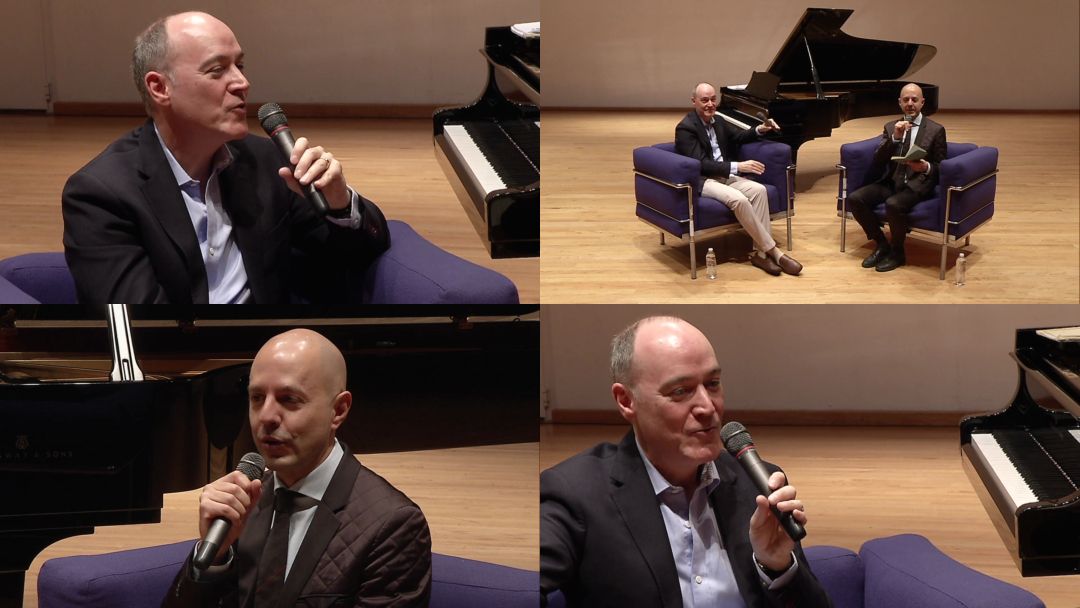
El músico Aquiles Morales entrevista al pianista Leon McCawley británico, quien comparte su trayectoria musical: desde sus inicios y los estudios realizados en diversos países, hasta los aprendizajes adquiridos de sus maestros. Reflexiona sobre la búsqueda de la exposición de su talento, las adversidades enfrentadas en su crecimiento musical y sus logros discográficos. Además, ofrece un adelanto del repertorio que presentará en su concierto en el marco de este festival
EXTRACTO_PROGRAMA
El músico Aquiles Morales entrevista al pianista británico Leon McCawley, quien repasa su trayectoria, reflexiona sobre los desafíos de su carrera y adelanta el repertorio que interpretará en su concierto en el marco de este festival
N_PROGRAMA
13
N_TOTAL_PROGRAMAS
15
DURACION_TOTAL
01:18:41:21
PARTICIPANTES
Leon McCawley, pianista inglés.
Aquiles Morales, conductor de orquesta y moderador
SEMBLANZA_PARTICIPANTE
Leon McCawley
Pianista británico con una trayectoria reconocida internacionalmente desde que obtuvo el primer lugar en el Concurso Internacional de Piano Beethoven en Viena y el segundo en el Concurso de Leeds, ambos en 1993. Ha ofrecido recitales en salas de referencia como el Wigmore Hall, el Southbank Centre y el Lincoln Center, y ha grabado una discografía que incluye obras de Haydn, Schumann, Rachmaninoff y el ciclo completo de sonatas para piano de Mozart. Se presenta con frecuencia como solista junto a destacadas orquestas del Reino Unido, Estados Unidos, Europa y Asia. Además de su actividad. Este festival De Piano en Blanco y Negro es el marco digno para su debut en México
TIPO_ACTIVIDAD
DISCIPLINA
Música | Música > Música clásica | Música > Música contemporánea
INSTITUCION_PRODUCTORA
PALABRAS_CLAVE
Conferencia | Festival | México | Música | Música clásica | Música contemporánea | Reino Unido
TRANSCRIPCION
Muy buenos días a todas y a todos. Estoy muy orgulloso y muy honrado de estar aquí al lado de un gran pianista de Inglaterra. Él es Leon McCauley, quien ha grabado muchísimos discos de los grandes compositores. Brahms, Schumann, Chopin, Schubert, Haydn, Mozart y también de compositores un poco menos conocidos. ya hablaremos al respecto. Ha hecho conciertos en todo el mundo, ha interpretado con las mejores orquestas, los mejores directores, y va a estar en el Festival en Blanco y Negro el día de mañana. Entonces, pues, será una conversación inolvidable. Y quiero darle la bienvenida al Maestro Leon McCauley. Bienvenido. Muchas gracias, Aquila. Es lindo estar aquí. Es maravilloso. Bienvenido al Festival y bienvenido a México. Estamos haciendo una pequeña tour en México. Tell us a little bit about what's the importance of coming to our country and being able to share what you do, always in the big halls in the UK, in the US and elsewhere, but coming to Mexico. Exactly. Well, I'm really excited to be here. This is my very first time in Mexico City. I've only changed planes here before, so I've never actually performed in this city. So really looking forward to it. I mean, the auditorium here is fantastic. It looks really wonderful. y también voy a estar performing después de este concerto mañana en Monterrey y también Torreón. Es genial tener una tour en un país diferente. Es muy interesante estar performing en diferentes lugares, obteniendo feedback de la audiencia. Es una gran manera de comunicación, ¿no? Performing y hacer música. ¡Vamos! Nos dice que es tu primera vez en México. Había estado aquí solo para cambiar vuelos, pero en esta ocasión pues ya viene para hacer una pequeña gira. Va a estar en Monterrey también y en Torreón. Y pues siempre es una bella manera de compartir la música con las diferentes reacciones, las diferentes audiencias. So, tell me a little bit about your beginnings. Let's talk about that. I listened to you sang in a choir a little bit, maybe. Yes, I think we also, music is, I mean, it's, for me, I'm always drawn to melody in music. And I think that's the singing qualities in the piano. I mean, it's all the composers that sing. I'm very much inspired by, so particularly Schubert and Chopin. Do you say that your most beautiful moment in life is to play some 18th century melodies? Yes. Yes, exactly. I'm so happy, especially the music of Mozart. Haydn es melodic. We're not on the same level as Mozart, which is very operatic music, of course. But beginnings, yes. I did sing in a choir, but I was very fortunate to go to a specialist music school, so something probably quite similar to the school which is here in Mexico City that's linked to Senat. There aren't very many of those in the UK But there was one in Manchester Which is where I'm from originally I'm from not far from that city In a province called Cheshire The county of Cheshire And I studied there But I don't come from a musical background So my parents didn't play anything But we had a piano in the house My parents bought a small piano for us I've got three sisters They bought a piano for us all to play on And then we took lessons con el profesor local. Yo vine de una ciudad muy pequeña, en el país, así que no hay muchas actividades de música, aparte de las actividades de la iglesia. Así que esto es como ir al chile, y también tocar el organ en mi local iglesia. Todos estos elementos, creo que realmente ayudaron a aprender cómo performar en frente de un público. Así que ellos eran mis principales de la iglesia. Bueno, le pregunto de sus inicios, si cantó en algún coro en Inglaterra y toda una tradición coral. Es tan importante la tradición inglesa de cantar en choirs. Y comenta que justamente es tan importante el canto en su vida, el canto después a través del piano, compositores como Mozart con este idioma tan operático que tiene. También Haydn, de otra forma. Y después regresa a contar un poco sobre sus inicios en una ciudad que está muy cerca de Manchester, una pequeña ciudad. Sus padres no son músicos, pero sin embargo tuvo un piano y también en la iglesia tocó el órgano. Y pues ahí es donde empezó a interpretar frente a las audiencias y cómo empieza este gusto por la música. So, yeah, I read that your teacher there was very important also because she... Yes, well that's right, well not coming from a musical family, my parents really didn't know how I could progress as a musician, so they were reliant on the advice of local teachers and this led to me to study in Manchester with a great teacher, Heather Slade Lipkin. I worked with her for over seven years and she really helped to build my foundation, not only technical foundation but musical foundation, so I owe so much to her. Y ella fue muy encuadrante. Ella también fue encuadrante y me ha ido en el final porque creo que algunos profesores encuentran muy difícil decir goodbye. Sí, ser honesto. Ser honesto, y decir, look for más oportunidades. Y esos oportunidades came later. I was able a audition at the Curtis Institute en Philadelphia y que fue mi siguiente muy inspiración y lo que fue a wonderful lugar. Already before leaving, you did some competitions, right? Yes. And you started playing a lot because you won Young Musicians. Yes, there was a competition in Manchester. Well, it was in Manchester, but it's a national competition, the BBC Young Musician of the Year, which is a huge competition for young musicians and it gives them a great platform and opportunity. It's televised and there are lots of concert possibilities. So this was always something I wanted to work towards. When I realised that I had a gift, I had some talent, and was encouraged by my teacher to enter competitions, I think without that help, I probably wouldn't have done it. I'm not necessarily, I don't consider myself overly confident. And I think entering those competitions helped build my confidence as a performer porque necesitamos mucho confianza cuando jugamos. Nosotros siempre nos preocup en un nivel nacional. Es emocionante, pero también muy nerve-wracking. Sí, puedo imaginar. Voy a traducir. Estos primeros concursos nos contó sobre su maestra Heders Leibniz quien fue un apoyo muy importante porque le dio esta seguridad, esta sensación de que su talento tenía que salir y a la base nadie nace siendo extremadamente seguro y entonces le ayudó mucho hizo algunas competencias como el concurso de la BBC para los talentos jóvenes y el que ganó y que lo llevó a participar en conciertos a nivel nacional por primera vez, le preguntaba qué tal esa exposición y dice que efectivamente él había hecho algunos concursos a nivel local nunca algo así tan grande y pues él le dice a sus alumnos que la única manera de superar este nerviosismo es estar constantemente en la exposición al público haciendo conciertos, etc. Ok. Translate very well, I think. I think you remembered everything. I'm very impressed. So, first time in America you already thought about that one time, I read that you were Estaba pensando en América. Sí. Es un plan de la oportunidad. El plan de la oportunidad. El plan de la oportunidad. Esa es la de la oportunidad de Heather Slade Lipkin, mi profesor, que ha sentido a nombre de sus estudiantes sobre a Nueva York, incluida Stephen Hough, que se puede familiarizar, un famoso concerto. Robert Markham, que también, que ha hecho muy bien. Hay dos pianistas que eran más de mi, que han ido a América. So by the age of, I think I was about 12, 13. You were already in there. Yes, I had it in my mind. Oh, maybe this is the place to study. Now, of course, I could have gone to London. I would have gone to London, I think, if I hadn't have got into Philadelphia. But the opportunity came by because my school orchestra went on tour to the States on the East Coast. Okay. That was probably one of my first opportunities of playing with an orchestra, but certainly on tour, just getting the feel of playing a concerto several times. And this was with the school. Did you play as a soloist? Yes, I played Beethoven, first piano concerto. And during the school tour, we visited several cities, and it included Philadelphia. Okay. And we visited the Curtis Institute, and I just fell in love with the place. Not only was it, I mean, it was such a beautiful building as well, but the teaching, the faculty was so impressive that I felt this was the place, if I could get in. Unfortunately, I was able to get in. It's one of the very few completely full scholarship places. I think it probably is the only one in the United States, isn't it? So, to be able to have full funding to have my bachelor, I did a bachelor degree education there. So, very thrilled to have that. And I worked with a wonderful teacher, Eleanor Sokoloff. She was on the faculty for many, many years. And in fact, I think she died sadly a few years ago. y creo que se hable el record de 80 años por casi 80 años ¿Y si vive en la época de 100 años? Sí, se died en 106, 107 Yo tenía una relación con una relación con ella y ella fue muy inspirada musically, introducía me a la música de Schumann, una música que ahora es una de mis favoritos pero en la época de 18 no había jugado ni de la mejora de Schumann me ayudó a entender su música y me ayudó a fallar en amor con ella. entonces habla ahora de este siguiente paso, desde sus estudios después de estar en Manchester va a los Estados Unidos, a Philadelphia al Curtis Institute y le preguntaba, yo leí que desde tiempo atrás él ya estaba pensando en ir a Estados Unidos y nos dice pues sigue la tierra prometida y obviamente hubiera podido estudiar en Londres pero hicieron un tour con la orquesta de su escuela en donde él tocaba como solista el concierto para piano número uno de Beethoven y ahí se enamoró, bueno fue a muchas ciudades, pero una de ellas fue Filadelfia y conoció el Caritas Institute y pues se enamora no solamente del edificio que es muy bello, sino también de los maestros, la enseñanza que había ahí. Entonces pues piensa que si logra entrar y que afortunadamente lo logró, pues sería una gran opción. Y es una de las pocas, o si no es la única escuela conservatoria en Estados Unidos que da una beca completa para quien logra entrar. Entonces es un lugar importante y muy especial. Y nos habló de su maestra Eleanor Sokolov, con quien mantuvo una gran relación durante muchos años. Ella falleció a los 106, 107 años. Tiene un récord de casi 80 años enseñando en el Curtis Institute, con quien mantuvo una relación muy cercana. y también le enseñó, entre otras cosas, la música de Schumann. Y él no había tocado obras tan grandes del compositor. Y gracias a ella es que se acerca esto. Tell me a little bit about the cultural shock or about not only the musical, but how was leaving the UK to another country? Do you remember a little bit of your feelings and your experiences? I absolutely loved it. I didn't really feel... It was a completely different place. But Philadelphia is a very European city. I don't know whether you've ever been there, but it has a European feel. It has a great history. It was the first capital of the United States. It has a beautiful square in the middle where the Curtis Institute is. It almost has a Parisian feel to it. So it didn't necessarily feel like I was going to a completely different world and I was working with it was a completely international school there were quite a lot of Europeans studying as well as Americans but yes, moving away from home I think because I'd been at a specialist music school it was a boarding school but unfortunately I stayed at home I lived quite close to the school so I never had a feeling of living in a city before so this was the first time I was in a city y de hecho, de hecho, de hecho, de hecho, de hecho, de mi familia. Creo que por el primer dos o tres meses, no es fácil. Pero luego, yo me quedé en, y me quedé muy bien. Lo que fue increíble fue que un par de camino, un par de un par de años, fue el Filiadelfia Orchestra Academy House. Y los estudiantes estaban allowed a... They gave free concerts para ir a la música. ¿Cómo increíble eso? Just to be able to walk everywhere in the city as well. It's one of those very walkable cities, which is unusual for the States. Whereas you have to get in a cab or, you know, everything is very spread out. London is the same. It's walkable, but it's a huge city. Philadelphia is much more intimate. So I think if I'd gone to New York, I probably would have had more of an intense culture shock. But Philadelphia felt, it felt very homey. Me he settled in pretty quickly. de Filadelfia, y que, pues sí, los primeros, tal vez dos o tres meses, pues extrañaba a la familia, etc. Siempre había vivido con ellos, puesto que en la escuela en la que iba, aunque es una escuela en la que muchos de los alumnos viven ahí, se llama boarding school, pero él vivía tan cerca que no necesitaba quedarse. Entonces era la primera vez que estaba lejos de su familia, que sí fue un poco difícil al principio, pero que es una ciudad que se sentía muy familiar, muy similar, y que además, pues, muchos de los estudiantes venían de otras partes, Y una de las grandes cosas era que estaban permitidos entrar a los conciertos de la orquesta de Filadelfia. Entonces, pues, que eso era fabuloso. Wonderful. And so the big competitions. Yeah. Vienna. Yes. Leeds. Tell us a little bit about those. Yes, they were... At the time, I just... I was looking at those as just opportunities. for more exposure as we talked about earlier I wasn't necessarily thinking about winning and a career it was more about being able to have those opportunities to perform thanks to the A Musician of the Year that gave me the confidence to believe in myself and yes have that self-assurance to enter the competition itself is to a competition so I decided I was in my second year at Curtis so I was still quite young, I was 19 but I tried for Vienna the Beethoven competition back in my home my parents bought a Bersendorfer piano for me when I was about 15, 16 so that I could practice on a better piano at home and we developed a relationship with Bersendorfer in London who were very kind enough to support me for a number of years so as a result of that I heard about the Vienna competition Bersendorfer were one of the sponsors of this competition so I thought this would be a wonderful opportunity a wonderful competition to enter the prize the most important thing was a Bersendorfer grand and also several opportunities I do, I still have it at home it's now 30 years old and it's in my studio at home so that was the big prize as well as concert opportunities and of course playing music by Beethoven the whole competition was all Beethoven we had to perform early sonata the middle period late period and variations and also some short pieces so again it was a great way of building up more repertoire while I was a student. How do you feel about the philosophical so deep and complex de understanding Beethoven so young. I know. It's not that easy. No, I think I was, yeah, of course, I had very little experience of life at that time, but we have imagination. We try and really get inside the composer, try to get inside the composer's mind. So I guess that's what I was trying my best to do. And of course, as the years have gone by and I've become older and more mature, my playing may have changed. It may not have changed in places, or I have different concepts, different ideas about it. Have you listened to a month of the time? No, I haven't. They're on cassette tape, and they're in a box somewhere. I haven't listened back. I probably should now. I'm not really a person that really enjoys going back. I try and then go forward and learn from an experience and then move on. But probably now, I've just turned 50 this year, which is a big year for me. I may now perhaps be a little bit nostalgic and go back and listen back and remember that. It was a very enjoyable and a very exciting period in my life to have won that competition quite early in my life. I hadn't expected it at all. I played really well. I was very confident and I was very happy to get through to the final. pero para ganar esa competición, me dio ese catálico para querer hacer más. Y luego la Lidia fue la gran competición, la Lidia Internacional. Entonces, le pregunto ya sobre estos años de, bueno, en Curtis y que entra a los grandes concursos. Entró a competir en el concurso Beethoven en Viena, del cual se había enterado porque en casa sus padres le habían comprado un Besendorfer y tenían una cierta relación ya con la marca y este concurso era patrocinado por Besendorfer entonces así se entera decide hacerlo solamente con la visión y la búsqueda de tener más exposición más conciertos, tocar en público no pensando propiamente en ganarlo, sin embargo pues estaba preparado y tocó con mucha seguridad etcétera, entonces gana el primer lugar, llega a la final, que no lo esperaba para nada, y después gana. El premio de este concurso es un Bess Interfer de cola, de concierto, en el cual aún estudia, tiene 30 años ya este piano, y es en donde sigue estudiando en casa. Entonces, bueno, la experiencia fabulosa, inesperada de llegar a la final y ganar. Y también nos iba a hablar ahora del concurso, The Leeds, otro gran, gran concurso, The Leeds Competition. The Leeds is the biggie. This is the big one in the UK and it's recognized all over the world. And it gave me a lot of opportunities, a lot of concerts. And I didn't win the competition, but I came second. I got through to the, yeah, I got through to the final. And at the time, how exciting that was just to get through to the final. didn't expect to do any more than that so um i was delighted to get that award it was very close in the competition uh closely fought between all six finalists and uh dame fanny waterman is the the president of that competition and what an inspiration she is um for promoting music piano music throughout the world and especially in the UK so this, yes, this was the launching pad for me really, the leads was the one that gave me the concerts and the opportunity the agent and yeah it was a starting point I can imagine yes, that's the beginning really, so you work all the way through your childhood, you think no, this is it, no, this is just the beginning, you've got a long, long way to go and I was fully aware de la fact que esto puede ser, puede ser un gran trabajo, Basically, all the repertoire that I'd performed for several years as a student in Manchester and then for the first two years of Curtis Institute. The first round, some Scarlatti, Schumann, Beethoven, Opus 111. That was a bit of a risk to do in the first round, but fortunately got me through. And then the second round I did Brahms Handel variations with some Bach to begin with, I think. Something in the middle. Some lists. Venezia, Napoli y es bringing back memories now. La semifinal, Haydn y Beethoven con el competencia, el 32 variaciones que he played y Schumann, y algo un poco que es un poco unusual que he ha sido introducido en Philadelphia, Samuel Barber, Piano Sonata, que es un tour de force, un war de la 20th century. You know the piece, it's a big, big feud, isn't it? Yeah. And yeah, I learnt that in Philadelphia with Eleanor Sokoloff, who knew Samuel Barber. She was there, they were colleagues at the same time, in the late 1930s, 40s. We'll talk about that in a minute. Yeah. And then in the concerto final, I did Beethoven 1. A concerto, I decided rather than, I had learnt some of the Rachmaninoff concertos and that possibly would have been the most obvious choice when entering a big competition such as the Leeds but because I'd done the Beethoven in May and on the tour it was a piece I felt most comfortable with and I thought this was probably the less risky and in the end it ended up being quite a good choice Beethoven 1 has a huge cadenza of Beethoven and it's a very substantial work puedes decir mucho en esta pieza y me suelto me suelto a la hora también yo solo me dijeron 20 entonces también yo era muy, muy joven y fresco bueno le pregunté sobre esta competencia que nos dice que es la grande realmente esta competencia una vez que la ganas te lleva a tener posibilidades de conciertos así tuvo su primera gente y en esta competencia le pregunté también sobre las diferentes piezas que interpretó son cuatro diferentes rondas para ganar, en la primera tocó la Sonata Opus 111 de Beethoven, la última, no sé si voy a recordar todo el repertorio, pero bueno, en cada ronda fue tocando cosas diversas y bastante difíciles de lo que había estudiado durante todos sus años, desde Manchester hasta los dos años que llevaba en Curtis, y en la final decidió, estaba, la opción más obvia es tocar algún concierto de Rachmaninoff, pero decidió irse por el concierto de Beethoven 1, que es el que había tocado ya varias veces en el tour y lo tenía más seguro. Y es una pieza que te permite expresar bastante, tiene una cadencia muy sustanciosa en la que puedes realmente demostrar en lo que tienes que dar. Entonces siente que fue una buena opción. En este concurso llegó a la final, lo cual ya era para él fabuloso, y al final obtuvo el segundo lugar, Lo cual pues se lo llevó a empezar una carrera que podría uno pensar que ahí ya se logró, pero en realidad dice, no, no, eso es apenas el principio de un camino muy, muy, muy largo, pues de una carrera que ciertamente es bastante difícil. Good. Big stuff afterwards. Tell me about the proms. The proms are a big thing in the world, but of course... Have you ever been? I watched them Oh you've seen them? Yeah but I have never been But it looks so big It is a mammoth It's absolutely huge I've never played anywhere so big It seats 6,000 people So it's sort of 10 times You can see it's big Bigger than this auditorium Yeah A magnificent place I mean they have boxing in the Albert Hall It's not only music They have all sorts of events Tennis, they hold tennis matches During the prom? No not during the prom I'm just saying, generally during the year it's used for all sorts of events and it's right opposite where I teach, I teach at the Royal College of Music in South Kensington and I have this amazing view of the Albert Hall from my teaching room, but going back to the proms, I made my debut there back in 1995 and yes it was daunting because I was worried whether would I ¿Can they be able to communicate to the audience that are so far away? There's an amphitheater, so far away from the stage. How will I possibly project? I think good enough. They are tricky. And I think as a performer, you have to believe that it's working. If you start doubting, then it all goes wrong. So you have to have a self-belief it's working. It's very hard to hear the orchestra as well because the space is so large. and it's all in a round, which feels unusual because most halls are sort of boxed in, and it's very round. But with a full house, strangely enough, it feels intimate. So it's large, but then the audience is drawn in it. What's very special about the proms is they have what they call promers. They're an audience that they're allowed to come in and stand. They have standing room right in the centre of the auditorium. So many hundreds of people come in and they queue. It's a very popular event, so people queue on the day and they get tickets. They can stand for the whole concert, which is tiring for them, but they're very, very enthusiastic to listen to all sorts of music. So, yeah, I played there several times over the years. Y cuando yo play ahí, es un gran highlight. Y ahora mismo con Beside ese concerto, querían un Mozart concerto. Así que esa es la que yo elegí. Y fue en un Bosendorfer también. Esa fue la primera vez. Pero desde entonces jugué en el Steinway. Bueno, le pregunté ya, después de haber ganado el concurso en Leeds, grandes cosas sucedieron. Participé en los Proms, que es un evento gigantesco en Inglaterra, en el Albert Hall, que es para 6,000 personas, diez veces esta sala, y donde tuvo la oportunidad de hacer su debut en 1994, en el 95, escogió tocar un concierto de Mozart, y bueno, nos habló mucho sobre qué se siente tocar en un lugar tan grande, seis mil personas, con una acústica que puede ser tramposa, engañosa, en el sentido de que uno se empieza a preocupar de que no se escuche, y es lo peor que puedes hacer. dice la única manera de lograr hacerlo bien es confiar, confiar en que te van a escuchar y hacerlo bien, no estar preocupado y bueno ahí fue su debut y tuvo la oportunidad de hacer varias presentaciones después cada vez que está ahí es un gran evento para alguien que es inglés, trabaja justo enfrente y tiene la oportunidad de ver esta sala que es tan grande y tan importante que se hacen incluso partidos de tenis y de box durante el año es un lugar muy muy muy muy grande y muy importante en Londres Wonderful So let's talk about your recording there's a lot to say the first thing I would like to ask is how are you when you record of course you play and then are you crazy ¿Qué es lo que está haciendo? ¿Cómo involucrado eres con todo el proceso? Oh, sí, yo estoy muy involucrado. Pero yo hice mi primer recorrido en 1997, so many años atrás, y mi attitude towards recorrido ha cambiado mucho. Para el primer recorrido, yo intento imaginarme en un concerto en un concerto. Que yo estaba en un concerto. That was the only way in my mind at the time that I felt I could give an honest recording if I felt I would give, or I really wanted to make it sound as live as possible. And of course in recording it's not. You know, there are lots and lots of edits involved. But I probably tired myself out a little bit too much and put a lot of pressure on myself at the beginning because I did an awful lot of playing, playing in long, long takes. Es parte de la aprendizaje. Tu tienes que encontrar tu propio o tuyo, o tuyo, tu propio modo de grabar. Es muy diferente para todos. Así que, sobre el tiempo, ahora estoy muy involucrado. Yo tendo a grabar en cortes, pero yo me gusta tocar la pieza en un lugar, primero de todo, especialmente para el productor, que no puede, dependiendo de la rapporteur, que no puede completamente familiar con la música. So you have to work together with the producer and the engineer. It's a very important relationship so that they can get a feel, first of all, of the structure of the piece, of how my general interpretation will be, so that we can work from that very first edit. So I always do that first of all, and then listen back right away, and then work out. And then probably think, oh my God, there's so many things I need to get right, or it's not quite the right sound, or not quite the right feeling. Entonces, también, me han convertido más patient con la procesión. Te puedes convertir muy impatient porque te quiero y quieres que tu mejor. Y a veces, las cosas no son muy bien en la take. Estoy muy bien en la parte de la mañana. Y la grabación de la mañana se empieza en la mañana. Y me hace un tiempo para que se acuerda. Así que, tienes que tomar que tomar en consideración también. So, yeah, it's a very different... I'm much more relaxed about recording now. In fact, I always used to record by memory. Now I will always have the music to hand. Sometimes I may play by memory, but I put less pressure on myself when I'm recording. I think that's what I've learned over the years. Le pregunté sobre... Bueno, ha hecho una infinidad de discos y le pregunté sobre la manera de involucrarse y de grabar. Es un proceso difícil. Y al principio trató de hacer tomas muy largas, como si estuviera en un concierto. Y le parecía que era la manera de hacer un disco, una grabación genuina y correcta, tratando de hacer igual que en un concierto. Y a lo largo de los años ha ido cambiando su visión. hasta que ahora pues se permite tomarlo de una manera más relajada y por ejemplo ya utiliza de pronto la palitura antes de hacer todo de memoria siempre graba una toma larga para que el productor, el ingeniero de audio conozcan la pieza y puedan darse cuenta de las ideas musicales y que si la pieza no es muy conocida, se familiaricen un poco de tal manera que puedan trabajar después pero ya no trata de que todo sea en una sola toma, después hacen las tomas que se necesitan y pues sí, a veces resulta difícil, por ejemplo, si empieza la grabación en la mañana y no es una persona que le sea fácil empezar y necesita tiempo para calentar, entonces lo toma con paciencia, con más paciencia que antes y pues sí ha habido una evolución y sobre todo que ahora ya lo toma de manera más sencilla. So, De acuerdo, de acuerdo, de los muy famosos composers. Pero yo estaba interesado por Samuel Barber. Sí, el primer recuerdo que hice fue Samuel Barber. Y luego hiciste otro recuerdo. Y luego hice otro recuerdo, sí. Y luego, no, no, no. No, no, no, no, no, no, no, no, no, no, no, Sí, sí. Ahora, el segundo uno con son recordings es el completo. Es incluir algunas de los primeros de Barber que no eran en print cuando yo grabé la primera primera en el año en 1997. Seguimos en 1997 en Virgin Classics. Sí, es un camino de recorso. I had to find algo que se ha encontrado. Porque hay muchas recorso de la recorso de la recorso. as a debuting to make my recording debut there was a lot of discussion Leon has to do something that's hardly been done before or something that is just slightly off the radar known but not so well known and the barber seemed a perfect fit because I had performed quite a lot of the music at the Curtis Institute I had really I felt it was very wide ranging repertoire for piano as well covers most of Barber's life from the early pieces to later his final piece composed in 1977 the Ballade which was commissioned by the Van Kleiben competition but the main work is the Piano Sonata which I think is one of the most strong 20th century Piano Sonatas a very effective piece y influenced by 12-tone Barber has an unusual style it's neo-romantic but then there are all sorts of little glints of 12-tone serialism as well interesting but also very lyrical, he wrote beautiful songs Barber I just wish he would have composed more melodic repertoire for the piano there's a great piano concerto que tiene un gran movimiento pero yo solo quería que componen más. Solo he comp y un hoedown. Así que, realmente divertido tocar. Estas son muy bien con audiencias. Sí, así que sentía una cosa muy buena para hacer. Y fue bien revisado. Tengo algunas buenas revisas. Estoy seguro. Le pregunté sobre sus grabaciones. Ha hecho, obviamente, de los grandísimos compositores, Mozart, Hayden, Schumann, Brahms, etc. Pero, dentro de todo su catálogo, me llamaron la atención algunas de las cuales le estoy preguntando primero por Samuel Barber un compositor estadounidense y recordó que fue su primer disco, su primera grabación, estaban buscando qué hacer y pues obviamente era interesante que no fuera algo que ya estuviera extremadamente tocado, por un joven pianista había que innovar, entonces él había estudiado esta música con su maestra en el Curtis Institute entonces parecía que era una elección perfecta entonces inició con eso disco después de un tiempo salió del mercado y decidió volverlo a grabar y en esta segunda grabación incluyó nuevas piezas, piezas que no estaban todavía impresas en el primero y después la primera disquera decidió volver a sacar el disco, entonces ahora se pueden conseguir los dos y bueno, nos habló un poco sobre la música de Barber quien escribió genialmente para el instrumento, su sonata Tal vez es una de las zonatas más importantes del siglo XX. Y sin embargo no escribió tanto para el piano. Y cada vez que escribía para el instrumento era porque tenía una comisión que lo llevaba a escribir para el piano, si no, no lo hacía. También nos comenta de algunas de sus obras que tienen influencia del jazz y que tienen mucho éxito con las audiencias. Y sin embargo su forma de escribir a veces es extraña, es do decafónica un poco, pero no del todo. Es también un poco del romanticismo tardío. Es una forma de escribir en la que a él le hubiera gustado que a lo mejor escribiera cosas más melódicas. Tiene algunos segundos movimientos geniales. Pero bueno, lo que escribió es algo muy relevante en la literatura pianística. Wonderful. Hay otro CD, Ronald Corp. ¿Y worked with the composer? I did, yes. It wasn't a commission, it was premiered before, but it was the very first recording of his music. And he was very much inspired by Shostakovich, there's a great Russian feel to his music, quite percussive, but also very much steeped in the English tradition. And he's a choral conductor as well, as well as a composer. Such a lovely man to work with. So that was a fun project, and he conducted as well. we recorded in Cadogan Hall in a beautiful hall in London How is it working with the composer as a conductor? Perfect, we had absolutely no problem at all and we worked together at the proms in fact back in 1999 so we knew one another that's how we got to know one another, I played the Frank Variation Symphonique with him, yeah the London Concert Orchestra le pregunté sobre otro disco que hizo con Ronald Corp en su concierto para piano que lo dirigió el mismo Ronald Corp quien también era un director de coro y con quien ya había trabajado lo conoció en los proms justamente tocando ¿cuál jugaste en los proms con él? Frank, César Frank las variaciones sinfónicas de César Frank y bueno ahí surgió la amistad de la relación y así es como decidieron hacer la primera grabación de este concierto para piano de Ronald Corp. Beautiful music. Bueno, vamos a ir al repertorio para tu concerto mañana. Así que estás libre de tocar cuando quieras mostrar. Justo llegué a la noche y tengo que me apropiar. Estoy un poco en el lado de la estrada. Quizás tocar un poco más tarde. Vamos a ver. Sí, tú me lo sabes. Vamos a hablar del repertorio. Lo invito a tocar si quieres cualquier fragmento. Obviamente que llegó ayer en la noche, un viaje muy, muy largo, entonces dice que vamos viendo. Muy bien. So, this is a big trip. It is. It's a journey for the audience, isn't it? It's a journey, yes. So, with starting, let me go. First of all, with Haydn. Yes. So, Haydn is a composer I've really got to know over the last few years. I mean, I had performed his sonatas when I was younger, but I've made four volumes now of his sonatas. I love his music. He's such an optimistic composer. It's so bright and there's a freshness to it. And I love that his sort of, it has very clear rhythm and articulation. But most importantly for me and what really makes me enjoy the music more is his humor. es so witty y muy wide ranging repertoire I performed sonatas many times in concerts and also there's a beautiful set of variations called the F minor variations which Haydn composed later on in his life that are totally different to the F major sonata that you'll hear tomorrow which has all the typical elements of Haydn's style Great articulation and wit Lots of jokiness In the music And some of the humour is because He uses silence in the music To create this humour There's a lot of unexpected Drama about it too There's nothing straightforward And sometimes it can be a bit rough It's refined in places But it has that element Of folk music in it It dances especialmente el tercer movimiento que voy a jugar. Así que abro con Haydn mañana. Bueno, le pregunto sobre el repertorio es un viaje enorme para el público vamos a ir hablando de todo pero son muchos momentos muy intensos, muy distintos, va a empezar con una sonata de Haydn quien pues es un compositor al que le ha dedicado cuatro discos de sonatas él acaba de sacar el cuarto y es un compositor que le llama la atención y le gusta en particular por el sentido del humor lo divertido que es lo inesperado que puede ser la utilización de pronto de los silencios en momentos que causa drama después hay unas partes muy refinadas unas partes que son basadas más en el folclor entonces tiene sobre todo esta los elementos juguetones entonces es una música muy muy viva I can play the opening Ok, wonderful. Sí, es una música que te hace sonreír, es una música que quieres tocar en las mañanas porque te despierta y te hace sonreír. Beautiful. Ok, entonces vamos a una más dramática y melancholic experiencia con Chopin's Nocturne. Yeah, such a poetic composer, and I thought these would be a contrast between the Haydn and the Beethoven works that I'm playing in the first half. These are later nocturnes. The first, Op. 55, is in the style of a march. It's quite melancholy and sombre, but like of all Chopin nocturnes, inspired by opera. For example, the opera is a Bellini. It has these beautiful long lines. pero muy, muy, muy, muy complejo harmonía. Es lo que hace él un gran genio. Pero con ese, con ese elemento, él es un compositor. Tenemos que ser aware de no ser indulgen demasiado en su música. Just let el música play por itself. I try y comunicar el música en el más natural posible, como si yo era un singa. Y el segundo nocturne es... Este es más complejo. Creo que es el más exquisito de la set. Es no tan tan conocido como el otro E-b de la opus anterior. Pero este es uno de mis favoritos. Es una hermosa canción. No. La canción de la canción Muy sotil música. Dante en fa menor, muy lírico, esa magia que tiene Chopin de cantar, el bel canto en el piano, pero con unas armonías sutiles y exquisitas, lo cual lo hacen un verdadero genio en la escritura, que finalmente es una escritura clásica, en la que no se debe uno de regodear en el rubato y en todo eso, sino dejar que la misma música vaya llevando de una manera como un compositor clásico. Y después el segundo nocturno, que es menos conocido, este Opus 55 en mi bemol mayor, el lento sostenuto, que es el que interpretó un fragmento. Es menos conocido, pero es muy, muy bello. Está hecho también como en una especie de dos voces, una especie de polifonía. Y bueno, pues that's the second part with the Nocturns. And then, of course... And then the big Les Adja sonata, the Farewell Sonata, Opus 81A, La pieza que he conocido por muchos años, en fact, he played it en la Beethoven competición y he felt 30 años, y he hadn't played it for quite a long time, for many years, que este año sería wonderful para bring it back y play it again. Returning, porque el music returned, el tercer movimiento, tiene un triumphant return. Es el más programático de Beethoven sonatas. Este título, Les Adieus, relates a la departure de Beethoven's friend y patron, el Archduke Rudolf, de la historia de la Napoleónica. He actually wrote, yes, Les Bavoles, on the first descending tres notes of the music. And this acts as a motif through the first movement. y es muy poignant depicting este deslizamiento, pero también el deslizamiento, lo que se puede imaginar el carácter en preparación y el deslizamiento, y entonces al final, el doors se deslizan el gates se deslizan y luego se deslizan y luego se deslizan y luego se deslizan Beethoven es increíblemente concise y es able a crear un muy fuerte emocional feel so quickly we relate to that immediately muy direct y luego this leads, it acts as a lead back to the return Archduke Rudolf, Beethoven waited until the Archduke had returned before he composed it, before he published it, wanted to make sure that he got back safely this is very exhilarating music, it's marked vivacissimamente it's a bit of a mouthful too as lively as possible, we translate it so I like to play it quite quickly it's a real prestissimo and lots and lots of fun to play probably one of the most joyful finales en el set de Beethoven 32 sonatas. bueno, va a seguir con la sonata Les Adieu La despedida de Beethoven que está en tres partes de la música más programática que escribió Beethoven inclusive con la palabra despedida en las primeras tres notas un motivo inicial y es una obra que Beethoven logra expresar bueno, la partida de su amigo el archiduque Rodolfo que, bueno, el duque Rodolfo, que era su amigo, que se tuvo que ir con la invasión de Napoleón. Entonces la primera parte se llama así, la despedida, y va contando de manera musical toda la preparación, cómo van preparando el carruaje, etcétera, etcétera, hasta que finalmente se cierran las puertas. Eso sería el primer movimiento. Let me explain. Después viene el segundo movimiento que es muy conciso y Beethoven logra de manera impresionante con muy, muy... pues son dos páginas nada más, digamos con poco material, darnos esta importancia de la ausencia, así se llama la segunda parte, la ausencia, y pues esa capacidad de síntesis que tiene Beethoven para lograr que la emoción pase en tan poco tiempo. Y después el tercer movimiento que es el regreso. Entonces se esperó Beethoven a ver que el archiduque regresara sano y salvo. Y es muy feliz, es uno de los momentos más vivachísimos de este escrito en la partitura. Y es uno de los momentos más alegres y más joviales que tiene Beethoven. Y en este sentido le gusta al maestro tocarlo bastante, bastante rápido. La Corte de la Corte de la Corte Yes, absolutely. Totally. They're the words I would say. Very, very intense. Brahms is incredibly influenced by Beethoven, classicism. There's great structure in his playing, in his compositions. And these two rhapsodies, even though they're cool rhapsodies, they're in a tight structure, but then they also have this great freedom and beautiful contrast. The middle singing parts. Yes. La parte del primer de la primera Rhapsody es casi como un Chopin nocturne con la belleza de la transparencia en la writing. Así que no es solo un escuadro, tienen un muy arqueológico, sinfónico feel para ellos. Y son realmente huge. Particularly el número dos, el segundo. Así que voy a abrir la segunda parte con esos y luego continuar con Schumann, con Brahms' Mentor. Bueno, entonces va a empezar la segunda parte con las dos rapsodias de Brahms, música muy intensa en donde hay una escritura ciertamente orquestal pero también de pronto un lirismo, unos cantábiles muy bellos que nos pueden recordar a la escritura de Chopin pero de nuevo regresan estas intensidades orquestales y en particular con la segunda rapsodia que tiene esa escritura bastante poderosa y bueno, vamos a terminar el concepto con Schumann. Tell a little bit about that Schumann piece. Yes, so remaining with the Viennese theme, most of this recital is inspired by the city of Vienna and this particular piece was written when Schumann visited Vienna. This is called Faschingszwank aus Wien, Carnival Jest from Vienna. Incredibly imaginative piece for the young composer. He composed this in his late 20s. I love Schumann because it's very spontaneous. You never know where you're going. You turn over the page and you can be in a different world. It's almost like you're reading his diary. It's very intimate and very personal music, inspired by the love of his life, Clara, of course, and then many others. He often pays tribute to composers of the past, so there are elements in this piece. There's a little quote from Beethoven. We hear a little bit of Chopin, some Mendelssohn. And there are hidden themes, some of them we don't even know about. So it's very enigmatic and sometimes quite puzzling for the listener. If you don't know his music, you can be a little bit surprised by it. There are a lot of unexpected turns, twists and turns in the music. This is in five movements. And the reason it's called Jest Carnival Joke is Schumann includes a little quote from the French National Anthem, La Marseillaise. But he dots it like that. It's quite a naughty quote because it was forbidden at that time. The Marseillaise was forbidden in Vienna because of the Napoleonic connection. So I wanted to compare those works, the Les Adiers Beethoven, and then we have another work inspired by Vienna in a different way. So it's a very fantastical first movement. Lots of different episodes. Also very inspired by dance music, like Schubert, Viennese music. And you can also imagine the carnival atmosphere, like the Mardi Gras. It's Shrove Tuesday we call it in England The day before Ash Wednesday So the audience, the listeners Can try and conjure up in their minds The sort of theatrical element Of different performers coming on and off the stage I like to try and think of it that way It has lots of character, his music And then there are You can hear elements of Brahms, the future music of Brahms, in the second movement and then the fourth movement, which is called Intermezzo, a title that Brahms used an awful lot in his later repertoire. And then, like the Les Adieux, I end this half in a very triumphant way. The fifth movement is very bubbly, it bubbles. Es effervescent, como champán. Sí, bienvenido en el concierto. Sí, exactamente. Una celebración al final del concierto. que revela en sus obras, en donde podemos ver como si nos estuviera contando su diario. Vemos, por ejemplo, compositores que le eran afines, de repente citas de diferentes compositores. También podemos ver el amor hacia su esposa, Clara Schumann, gran pianista y compositora también, que pues marcó fuertemente la vida de Robert Schumann y también de Brahms. y podemos también ver un poco este sentido del humor que tenía Brahms, la obra se llama así como una broma en el carnaval de Venecia y toma un fragmento breve de la Marselleza que en ese momento estaba prohibido en Viena porque Napoleón había invadido y entonces toma así de manera pues algo rebelde haciendo una broma pesada, un fragmento de la Marselleza y se puede escuchar eso en el primer movimiento también se puede escuchar un poco de música folclórica un poco y bueno tiene otros movimientos esta obra el cuarto es el intermezzo el intermezzo que pues uno puede ya empezar a imaginar al Brahms después que escribió varios intermezzo y el último movimiento es una pieza muy efervescente, como si fuera champaña, terminar el concierto con esta fuerza. And the second movement, you said something about it. The second movement is called a romance. Ah, es llamado, es una romanza. Yeah, obviously inspired by his love for Clara. Inspirado en su amor para su esposa Clara. Beautiful program. Yeah, so hope the audience will enjoy it. We will. Yeah, hope so. Espera que lo disfrutemos y así será. And there may be a little bit more after the Schumann, if they like. Of course they will. Tal vez habrá algo más después del Schumann. Well, we always have some comments from... All right, okay. So, you have a... Nothing embarrassing, I hope. So, Andrea Vallejo from Puerto Vallarta, I don't know if you know it, it's a beautiful beach town here in Mexico. ¿Cuándo te vienes a Puerto Vallada? Bueno, es un maldito. Estoy aquí visitando tres cities, pero no tengo tiempo para ir a visitar Mexico City. No, porque estoy aquí para trabajar. Pero, ¿cuál es otra vez? Hopefully, ¿cuál es otra vez? No, no, no, no. Pero no, no, no, no, no, no ¿Quiénes de la educación en México? ¿Quiénes de la educación en México tiene un exam sistema? Cuando estudiantes están aprendiendo música, ¿túes van a ir a un exam sistema como este? ¿Algo similar? Es un país con muchos grandes diferencias. Así que, en el país, no tienen un gran educación en México. En el municipio, en Monterrey, en Guadalajara, hay un poco más. So it really depends. People that are very focused will get into that. So I would say to the young ones, just follow your passion and enjoy what you're doing. Don't get too bogged down in all the detail at first. Just focus on the music. Listen to lots of recordings. Go to concerts, really, you know, all sorts of concerts. I mean, it doesn't even have to be all classical music. I don't really like that term classical music anyway. Let's just call it music. Es tan variedad, especialmente el repertoire de piano. Así que diría que escucha lo que sea posible. la pregunta era ¿qué consejo le daría a los jóvenes pianistas? me preguntaba un poco cómo es el sistema aquí si hay mucha competencia, muchos concursos le digo que es tan variado el país hay tantas diferencias entre las ciudades y los pequeños los lugares más pequeños obviamente que no hay las mismas oportunidades ni mucho menos en general creo que deben de seguir su pasión, no fijarse tanto en los detalles sino tratar de seguir su camino escuchar mucha música, ir a muchos conciertos y que escuchen mucha música clásica la cual ni siquiera se debería llamar así hay que llamarla simplemente música ¿Cuál persona te sientes que te ha influenciado el más? ¿Suscríbete como profesor o cualquier persona? Es abierto Ah, es abierto No tengo una persona particular pero tengo que decir the three teachers in my life because without those teachers I wouldn't be here today talking to you I really feel that the power of teaching is so important in the education of music sometimes they're forgotten about they're not necessarily always given that prestige it's always the performer but behind the performer usually is a great teacher y yo tenía tres grandes profesores como Heather Steyn-Lipkin Alan Osokalov y también un mentor que he trabajado con por muchos años en Londres Nina Milchina un russiano que vivió en Londres por muchos años un gran jugador de Mozart he aprendido mucho de ella así que son tres tres personalidades la pregunta es ¿cuál es la personalidad que más ha marcado su vida? y contesta que pues son sus tres maestras que realmente a veces se les da poco lugar, poco honor a los maestros. Se les da todo el prestigio al intérprete pero detrás de un intérprete están los maestros y piensa que sin esas tres maestras no sería lo que es. Nos habló de... Ya nos había hablado de dos, de Eleanor Sokoloff y nos había hablado también de Heather Slade Lipkin y al final nos habló de una una maestra rusa Nina Melchina quien es una increíble intérprete de música de Mozart ok, congratulations great conversation thank you very much Akila, it's been a great pleasure to talk to you today it's not over yet it's almost over your teaching you just talked about the importance of teaching so Yeah, I've been teaching at the Royal College for 15 years and it's a very important part of my life. And I have at the moment about five or six students a year. I teach one day a week and I think that goes really well. Having that varied career of a performer and teacher is very satisfying for me as a musician because it also helps. It keeps me on my toes. It keeps me questioning why I'm here also, what I can do to improve. I'm always learning as a musician and teaching helps you to do that. And it can be very inspiring, inspiring others, passing on the legacy that I've been given from my teachers as well. I think that's also a very important element for me. I don't just want to die and then the legacy has disappeared. Everything I've learned from my experience. So that's an important element too. Yeah, it can be challenging sometimes because everyone has a different personality. As a teacher, you have to try and react differently to each person. But very gratifying, very rewarding. Le pregunté sobre su labor como docente, como maestro y contesta que es una parte muy, muy relevante. de lo que hace, tiene un día dedicado a la semana para enseñar y es una labor que le permite mantenerse bien con los pies en la tierra, preguntarse sobre su propio qué hacer y mantenerse aprendiendo y reflexionando al respecto y también la importancia que tiene pasar este legado tan grande y tan importante que recibió de sus maestras en toda su formación a las siguientes generaciones y que no cuando se muera pues ya se quedó ahí sino tratar de que esto siga y pues tiene sus retos como los diferentes tipos de personalidad a los que se enfrenta y pues uno tiene que ser reactivo y adaptarse a las diferentes personalidades a quienes uno les tiene que enseñar y la última pregunta tu nuevo CD estás preparando un nuevo recorrido y me siento que es muy diferente que los otros porque todos los otros Es una composición que se llama la theme. Para la primera vez, es una themática. Sí. Es un álbum. Y es increíble. Sí. Estoy muy emocionada por esto. Este idea came about durante el lockdown, cuando nadie de nosotros podía ir fuera. Y nosotras, nosotras, y yo he siempre he de la vida de So this idea came about, there's so many composers that are inspired by nature and the natural world that it would be a good idea to do something totally different in my repertoire. And perform works and record works that I've done and played for many years, but I've never put onto disc. Yeah, as a compilation with this theme running through it. And also, it's called natural connection. So all the music has a deep connection to nature el mundo natural. y Daisies, Tchaikovsky, lots of Liszt, a composer I love, but I've never recorded before. French music I love too, but I've never recorded those works. As well as Claire de Lune, I'm doing Debussy, Lille Joyeuse, Jardin sous la pluie, Gardens Under the Rain, Jeudot, and also pairing Ravel Jeudot with Liszt, Jeudot à la Villa d'Estée. y ahí es el un usual el Godovsky arrangement de la soa yeah Saint-Saëns la soa so some of them are like encores there's a very popular element to this so yeah that will be coming out be released early next year on the Somme label a record label I've been recording quite a lot over the years looking forward to that release so just before I came from Mexico, I've been listening to the final edits and so that's we've done the master now cross fingers le pregunté ya para terminar sobre su nuevo álbum que sale en enero en inicios del próximo año que se llama Natural Connection el Conexiones Naturales y por primera vez todos sus otros discos han sido sobre un compositor música de un compositor, en este caso es una compilación de diferentes compositores que tienen que ver en algo, en algún aspecto con la naturaleza. Esto surgió, fue una idea que surge durante la pandemia, en este tiempo donde teníamos tiempo de caminar en la naturaleza, etc., y reflexionar, surge esta idea de tomar elementos de diferentes piezas que tengan que ver con la naturaleza, que ha sido un tema muy utilizado por los compositores, y juntar a compositores como The Busee en su Claro de Luna, una obra que se llama Música de Noche de Bartók, donde está inspirada en los insectos, por estas dos piezas juntas, el tema del agua con J'Do, Juegos de Agua de Ravel, y J'Do a la Vila de Este de Liszt, también estas dos piezas se juntan, también del mismo TBC, Lille Joyeuse, La Isla Alegre, una obra de... Ajá. Hay muchas otras cosas, hay 21 tráconos. So there are lots of it. There's Greek music. There's Greek music as well. Y una transcripción. Brackman and O. The Swan. Bueno, un disco que tiene muchas diferentes piezas. Y justo nos comenta que antes de venir a México estuvo haciendo las últimas ediciones. Ya está el máster. Y que pues espera que todo haya salido bien. Congratulations for that. And we're looking forward to listening to that. Muchas gracias. And we're looking forward for your concert. Muchas palabras para el público mexicano y la gente que está viendo todo el mundo. Bueno, ha sido un placer hablar con ustedes hoy y con la audiencia aquí. Y espero que ustedes disfrutéis mi recital mañana. Estoy encantado de estar aquí. Voy a romper un pie, espero. Bueno, una de las últimas palabras agradecer a la audiencia aquí, agradecer la conversación y pues esperando que disfruten también el recital y break a leg. Arriba. Not really in this context, but... Thank you so much. Thanks.
SISTEMA
ATSC
DOCUMENTO_DIGITALIZADO
Sí
FECHA_AUTORIZACION
29/09/2023
FECHA_INGRESO_ENTREGA
30/04/2025
OBSERVACION_DERECHOS
Vigencia de cinco años renovables en forma automática por periodos iguales y por pases ilimitados durante la vigencia de la misma
INGESTO
Jorge Vallejo Gutierrez
BARRA
Difusión
TEMPORADA
2023
CONDUCTOR
Aquiles Morales, director de orquesta. Moderador
TEMA_CONTENIDO
Semblanzas sobre concierto de piano
FECHA_GRABACION
29/09/2023
LOCACION
CLASIFICACION
A
IDIOMA_ORIGINAL
Inglés | Español
REALIZACION
Cesar Rodriguez Iñiguez
PRODUCCION
Aurea Ruth Rendon Melgarejo
CALIFICACION
1
00:00:00,000 --> 00:00:33,133
Inicio
Cortinilla
La Secretaría de Cultura
Y el Centro Nacional de las Artes
Presentan
26 Festival Internacional de Piano
En Blanco y Negro
Charla
Leon McCawley
Gran Bretaña
2
00:00:33,133 --> 00:47:43,594
Inicia
Charla Bajo la conducción de Aquiles Morales (Moderador)
Y Leon McCawley (pianista)
3
00:50:53,750 --> 00:52:04,020
Nocturno, Op.55
II. Lento sostenuto en Mi Bemol Mayor
Fréderic Chopin (1810 - 1849)
4
00:52:04,020 --> 00:58:00,009
Continua la charla
5
00:58:00,009 --> 00:58:31,407
Sonata para piano n. 26
En Mi Bemol Mayor, Op 81a, Les Adieux
III.Das Wiedersehen. Vivacíssimo
Ludwig van Beethoven (1770 - 1827)
6
00:58:31,407 --> 01:18:30,839
Continua la charla
7
01:18:30,839 --> 01:18:41,683
Fin de la charla
Still Copyright MMXXIII

