
Document
Thumbnail
Share
CUID
MW-01237
TITULO_SERIE
SINOPSIS_SERIE
Serie dedicada al análisis de diversas manifestaciones artísticas y culturales desde perspectivas históricas, educativas, críticas y experimentales. Aborda la formación artística, la interdisciplinariedad y los vínculos entre arte, ciencia y humanidades, así como procesos de creación en música, danza, literatura, teatro, cine, artes visuales y nuevas tecnologías. Explora tradiciones culturales, lenguajes contemporáneos y prácticas híbridas que amplían las formas de producción, interpretación y difusión del arte. También reflexiona sobre la preservación del patrimonio, la memoria cultural, la investigación artística y los desafíos de la educación, destacando el arte como espacio de conocimiento, expresión y transformación social.
EXTRACTO_SERIE
Explora la creación, investigación, educación y difusión artística mediante el análisis de diversas disciplinas, tradiciones culturales y lenguajes contemporáneos, destacando los vínculos entre arte, conocimiento, memoria y sociedad.
TITULO_PROGRAMA
SINOPSIS_PROGRAMA
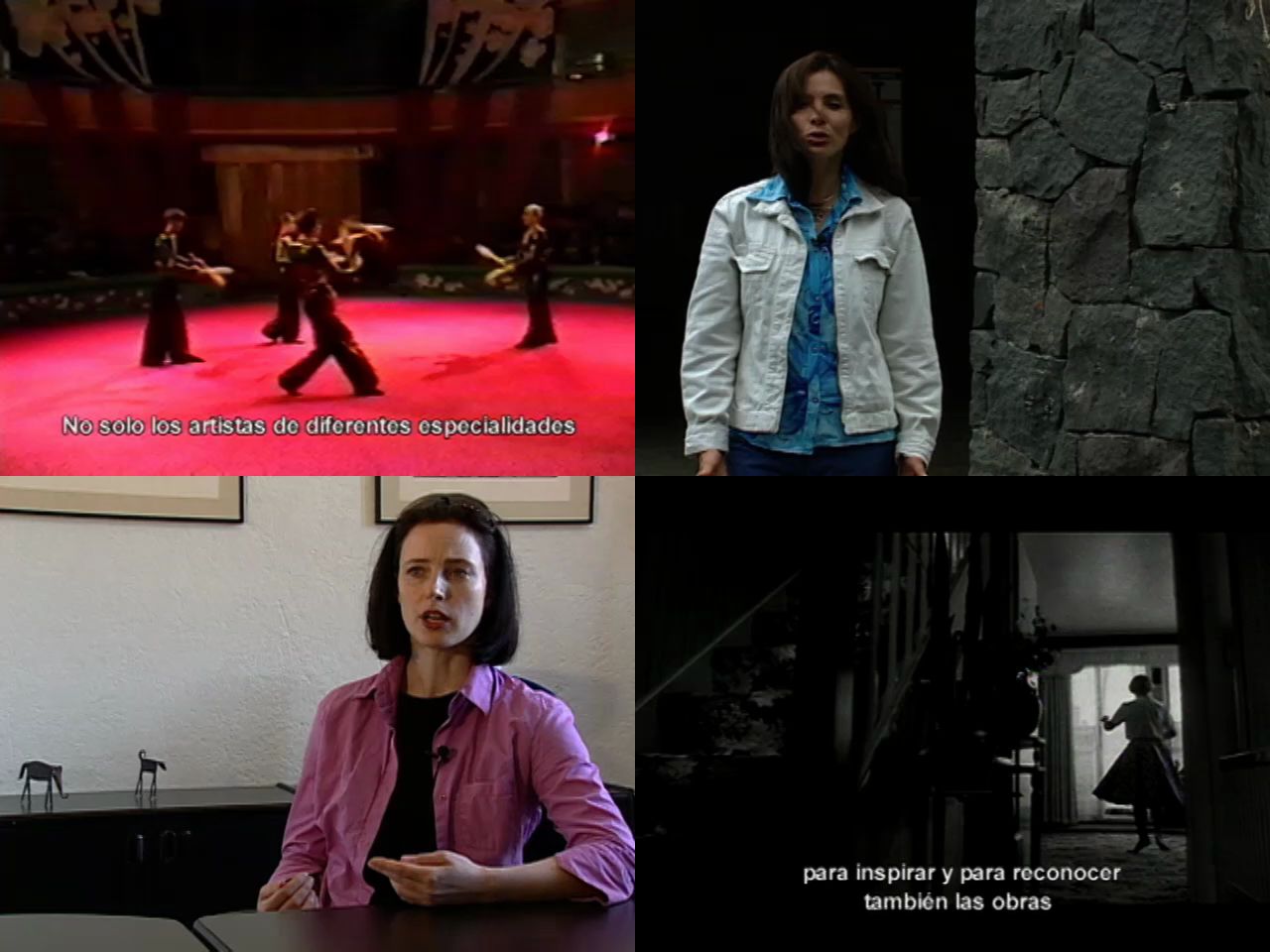
Explora dos ámbitos de creación artística vinculados con la formación y la experimentación interdisciplinaria. Por un lado, aborda el circo como una disciplina que integra música, teatro, literatura, coreografía y técnicas especializadas, destacando la importancia de una preparación artística integral y la preservación de sus tradiciones. Por otro, presenta la videodanza como un lenguaje que combina coreografía y recursos audiovisuales para generar obras concebidas específicamente para la pantalla, ampliando las posibilidades del movimiento, la percepción del espacio, el tiempo y la colaboración entre distintas prácticas artísticas.
EXTRACTO_PROGRAMA
Analiza la formación integral en el arte circense y la videodanza como una disciplina que une danza y lenguaje audiovisual, resaltando la colaboración interdisciplinaria y nuevas formas de creación y expresión artística.
N_PROGRAMA
5
N_TOTAL_PROGRAMAS
13
DURACION_TOTAL
00:26:00:15
PARTICIPANTES
Julio Rebolledo, director de Relaciones Públicas del Circo Hermanos Suárez.
Dra. Valentina Savina, directora de la Escuela Estatal de Circo y Variedades de Rusia.
Vivianne Cruz, coreógrafa.
Miranda Pennell, bailarina, coreógrafa y cineasta inglesa.
SEMBLANZA_PARTICIPANTE
Mónica Bejarano es actriz mexicana de cine, teatro y televisión. Su trayectoria comprende la participación en producciones escénicas, cinematográficas y televisivas, colaborando con compañías, directores e instituciones culturales. Ha intervenido en montajes de teatro contemporáneo y clásico, así como en largometrajes, cortometrajes y series de televisión. Además de su trabajo como intérprete, ha participado en proyectos de formación y difusión de las artes escénicas mediante talleres, lecturas dramatizadas y actividades vinculadas con el desarrollo teatral.
Julio Rebolledo Cárdenas es historiador mexicano, investigador y promotor de las artes escénicas y circenses. Ha desarrollado proyectos dedicados al estudio, la documentación y la difusión de la historia del circo en México, además de colaborar en iniciativas académicas y culturales relacionadas con las artes del movimiento. Es creador y director de la Licenciatura en Artes Escénicas y Circenses Contemporáneas de la Universidad Mesoamericana, en Puebla, programa orientado a la formación profesional en el ámbito circense y escénico. También participa como conferencista, asesor y curador en proyectos especializados.
Valentina Mikhailovna Savina es directora artística de la Escuela Estatal de Circo y Artes Escénicas y Variedades de Rusia. Ha desarrollado una trayectoria dedicada a la formación de artistas circenses y escénicos, así como a la dirección de programas académicos y de creación artística. Ha participado en la organización de espectáculos, festivales y proyectos de intercambio internacional vinculados con las artes circenses. Su trabajo se ha orientado al desarrollo de metodologías de enseñanza y a la difusión de la tradición del circo ruso en distintos países.
Vivian Cruz es directora, coreógrafa, bailarina, actriz y videoartista mexicana. Su trayectoria integra la creación escénica y audiovisual mediante proyectos interdisciplinarios que combinan danza, teatro, performance y video. Ha presentado su trabajo en festivales, foros y espacios culturales de México y el extranjero, además de colaborar con compañías y artistas de distintas disciplinas. También ha desarrollado actividades de docencia, investigación y gestión cultural, impulsando proyectos enfocados en la experimentación escénica y el diálogo entre cuerpo, imagen y tecnología.
Miranda Pennell es bailarina, coreógrafa y cineasta inglesa. Su trabajo combina la danza contemporánea, el performance y el cine experimental, con proyectos que exploran la memoria, la historia, el colonialismo y las relaciones entre imagen y movimiento. Sus películas y obras audiovisuales se han exhibido en festivales internacionales, museos y centros de arte contemporáneo, mientras que sus creaciones coreográficas han formado parte de programas escénicos en Europa y otros países. Su producción abarca tanto la investigación artística como la realización cinematográfica.
TIPO_ACTIVIDAD
DISCIPLINA
PALABRAS_CLAVE
Arte contemporáneo | Artes visuales | Creación artística | Educación artística | Identidad cultural | Investigación cultural | Literatura | Música | Patrimonio cultural
TRANSCRIPCION
Hoy, en Visión Creadora, conoceremos las reflexiones de Valentina Sabina, directora de la Escuela Estatal de Circo y Variedades de Rusia. Además, la coreógrafa inglesa Miranda Penel nos hablará de la relación del video y la danza. Bienvenidos a Visión Creadora, espacio dedicado al arte, la investigación y la creación. A propósito del Programa Internacional de Formación de Artistas del Circo y de la Calle, veremos a continuación la presentación de una ponencia de la doctora Valentina Sabina, que es la directora de la Escuela de Circo y Variedades de Moscú, quien se está presentando actualmente en un curso dentro del Centro Nacional de las Artes, precisamente para que los mexicanos podamos valorar lo que ha sido la sistematización del conocimiento del arte circense en la Unión Soviética. Ella, con toda su experiencia, viene a darnos una serie de comentarios sobre una probable formación de una futura escuela de circo en México. Así que a continuación veremos a la doctora Valentina Sabina. Valentina Sabina y la enseñanza circense. Цирк детства моего Согретый людским дыханием стель. В лучах прожих дорог, Блистали сёстры кох, Мелькали волосатых тигров с львами. И раздавалась ама, И восхищённый вдох, И кланялась у грима и рим. Цирк детства моего, цирк детства моего, Всю жизнь тебе я благодарен, В средине нас в дне, И всех до одного, Дарил бурит доброту и чудо. Наездник на колене закладывал вираж. Он в сорок первом ранен был в июне. А как смешили нас, то склякся карандаш, То вяк с незаввенной манью. Церк детства моего, церк детства моего, До сих пор седым мальчишкам свинится, Литком набитый за, шмели и пальто, И светлые восторженные лица. Цирк — это великое искусство, хотя многие ученые на протяжении десятилетий спорили, искусство это или нет. Это... Почему я считаю, что цирк — это искусство? Потому что искусство цирка — это искусство, дарит радость. И все, что дарит радость людям, — это великое искусство. Будущее цирка мне видится светлым. Потому что некоторое время, когда век компьютеризации заполонил многие виды искусства... И Олярка, и Александр Иль. Цирк — это искусство натуральное. То, что натурально, будет жить вечно. Цирк не может существовать без музыки, потому что вся работа циркового артиста основана на музыку. Цирк не может существовать без театрального искусства, потому что артист цирка приносит в манеж образ. Не только артист любого жанра, но возьмите клоуна, который кроме всего умения в цирковом жанре, он великий актер. Цирк не может существовать без литературы, потому что в работе того же клоуна присутствует речь, поэтому цирк объединяет все виды искусства. И литература, и театр, и музыка, и хореография, потому что пластика циркового артиста основана на хореографии, поэтому все они сосуществуют вместе. современного цирка, он развивается традиционно, хранит свои традиции вековые. Но самое важное, что 45 стационарных цирков в России. Программа почти всегда проходит аншлагом. То есть интерес зрителя не пропал. А это очень важно, значит искусство цирка жива и будет жить. Приобретение профессии. Если раньше профессия артиста цирка передавалась в семье, от родителей к детям или от мастера к ученику, то цирковая школа имеет задачу воспитать не только высокого профессионала в жанре циркового, но и всесторонне развитого человека. Так устроен учебный план, что помимо профессиональных дисциплин студенты изучают очень много различных предметов Общеобразовательных, социально-экономических и общепрофессиональных Например, как история мировой культуры, которая включает историю театра, историю музыки и историю изобразительного искусства естественную историю цирка. Кроме того, студенты обучаются правилам техники безопасности для будущей профессии и много-много другого. ¶¶ La videodanza en la voz de Miranda Penel. Bueno, la videodanza en México es un arte que se ha llevado a cabo desde hace 15 años, pero realmente no ha tenido una difusión, no ha habido una continuidad. Esta vez que vino la artista Miranda Penel, fue muy interesante el encuentro porque casi nunca tenemos oportunidad de hacer ese tipo de talleres, y menos con el videodanza, que es de las artes consideradas en México, de las más nuevas o de poca investigación. Estuvimos algunos artistas colaborando, trabajando juntos a través de lo que Miranda nos vino a mostrar, como más que un taller, un curso de videodanza, fue un trabajo de experimentación de los artistas y ella transmitiendo su punto de vista, cómo se ha acercado a la videodanza, cómo ha investigado. Lo más interesante de todo esto es que ella fue bailarina, coreógrafa y después se adentró en el lenguaje del videodanza. Igual que algunos de los que estábamos participando, éramos también coreógrafos y bailarines. Y eso hizo que tuviéramos un acercamiento mucho más afín, entendiendo el lenguaje de la danza y de la coreografía y al mismo tiempo el lenguaje del video. El trabajo de Miranda ha sido una experiencia muy bonita para nosotros porque nos abre las perspectivas, nos abre el mundo de las ideas, de las imágenes, de la manera de ver la danza. Y pues ahora los dejo con Miranda Penel y su trabajo. - - - Set! - Ready? - Ready? - Pressing. - Cut! - Ah! I'm sorry. Shhh. *Mario's - Three, four, five. - Forward, two, three, four, six, down. - Forward, forward, forward. - Video dance is dance films and dance videos. They're usually made, they come from a collaboration between a choreographer and a film or video maker working together in a partnership. And the main, I guess what video dance isn't, is video or film recording of a stage work. Video dance work should be a piece of work which is an artistic work in itself, which is using film and video language, using editing, using framing, as part of the creative language to express choreographic ideas. Well, at the moment, it's a really flourishing area. There was a lot of video dance works made during the '80s in France, and in Britain there's been a lot of work over the last 10 years, and at the moment it's an expanding area of creative work. But I think it's important to recognize that dance films have been in existence since the beginning of cinema, and that artists have been working with movements and with film for a long time. So I think you can trace it back to artists in the '20s, from Dadaist artists to the '40s. There were artists, a Canadian filmmaker called Norman McLaren, who was combining animation with live movement and dance, to artist filmmakers in America in the '40s, such as Maya Daron, who was working with dance. She was interested in the ritual aspect of dance and film and working with space and time. So there's a whole tradition of people working with film, with movement, whether it's as artists, as filmmakers, or as choreographers. And I think video dance is a term which is used at the moment for a particular area that's becoming quite, that's an expanding area. And when I began, it was very much a low budget productions where I would be the performer and I would film myself taking on different characters. After I got funding from the Arts Council of England, I then started working with professional crews and also working with different kinds of dancers and performers as a choreographer stepping outside of a performing role. In my recent work, I'm looking much more abstractly at the nature of choreography and movement. So that's brought me to working with, recently I've been, I made a film about soldiers in England and I was filming the military displays and choreography in the military drill and editing it in such a way as to create a dance from these very strange rituals which the soldiers make. So now my work is looking in a more abstract way at the potential of finding dance and movement in the world around me, rather than actually making the choreography, making the movement. So I guess it's using editing to reinforce the idea of choreography. I think I've been doing quite a lot of teaching choreographers working with film and video. And the main thing for choreographers, I think, is to understand the different use of space in film and the different way of working with time in film. It's a different language than the theatrical language. So there's a challenge there to think about creating movement, especially for the screen. So I think it's a challenge for choreographers to think about creating movement, especially for editing. especially for the frame. And I think for filmmakers, it's a wonderful opportunity of working with rhythm, with visual patterns. All the things that movement and choreography has are things which film also has, working with rhythm, with pacing, with visual patterns, working with sound and image. So there are two forms that go together very well so long as the artists involved are really understanding the languages. I think also working with a more filmic language and a less theatrical language means that choreographers are working with more natural movement, less stylised, and working in natural environments. So it's almost integrating movement with real life. I think that's quite a common tendency. And I think another important opportunity for choreographers a lot of choreographers have been working with, instead of working with young, professional, virtuoso dancers, they've been working with, for instance, young dancers, children, older people, maybe not professional dancers. So it's given, it's allowed a diversification in terms of what dance can mean and what movement, who is the dancer. And another thing is, I also think that film means that people can really broaden the definition of dance. So for instance, recently there's been a dance film that won a big award, which consisted of an editing of archive footage of birds flying. And through the editing, the movements of the different birds was created into a choreography that was set to music. Now, of course, for a lot of people this isn't dance, but I think it just shows the kind of range of work that can happen in this area. I mean, what I've noticed in England that's really made a difference even in the last five years, it's just one thing is having workshops and training sessions to encourage and inspire and give some skills, both for choreographers working with video, and also to encourage cross-collaborations collaborations between film and video makers and with dancers and choreographers. An important thing I think is that people see a lot of work so I think screenings are very important to show all the different, there's such a big range of work being made in this area to inspire and to recognize also tradition of work that's being built up. So I think screenings, training and also some kinds of conferences or dialogue between filmmakers, between choreographers, so they can support each other. And of course the final element is supporting the making of the work, and that usually involves money. But also with the new technology, I think it's much cheaper to make work, and people can work on much smaller budgets if they can get hold of access to camera and editing facilities. The great thing with working with film is that it helps choreographers to think in different ways and to experiment with dance and to expand the thinking and the working process. And I think there seems to be quite a lot of interest in it here. So, you know, I think it's a great way of expanding the audience for dance as well and for collaborating between different art forms. So I think, you know, all the potential is there, it just needs to be supported, really. Reflection in the glass. And I thought, oh, isn't that wonderful if that was only me dancing with that man? Thank you. Oh, my God. Alguien me dijo a mi trabajo, me dijo que tu madre de danza te hacía caminar. Eso es lo que dijo. Uno de los chicos en el hospital tenía una radio. O me puso un círculo en mi carpeta. Les recordamos que estaremos recibiendo sus preguntas .
SISTEMA
NTSC
DOCUMENTO_DIGITALIZADO
Sí
FECHA_INGRESO_ENTREGA
10/04/2003
FECHA_PUBLICACION
11/04/2003
CODIGO_BARRAS_LTO
BWF480
INFORMACION_ADICIONAL
http://www.cronica.com.mx/notas/2003/55181.html [Consulta: 24 de agosto 2015] http://viviancruz.com/ [Consulta: 24 de agosto 2015] http://www.mirandapennell.com/ [Consulta: 24 de agosto 2015]
BARRA
Difusión
CONDUCCION
Mónica Bejarano, actriz mexicana de cine, teatro y televisión
TEMA_CONTENIDO
Análisis y divulgación de las artes y la cultura
LOCACION
CLASIFICACION
A
IDIOMA_ORIGINAL
Español | Ruso | Inglés
ENLACES_RELACIONADOS
http://www.cronica.com.mx/notas/2003/55181.html [Consulta: 24 de agosto 2015]
http://viviancruz.com/ [Consulta: 24 de agosto 2015]
http://www.mirandapennell.com/ [Consulta: 24 de agosto 2015]
REALIZACION
Edgar Mauricio Sánchez Alcántara
PRODUCCION
Sara Iñiguez Escalona | Illa Geisel Serna Munguía
LIGA_COLECCION_INTERFAZ
LIGA_VIDEO_INTERFAZ
https://interfaz.cenart.gob.mx/video/vision-creadora/#tab-id-1?play=id_0005

